

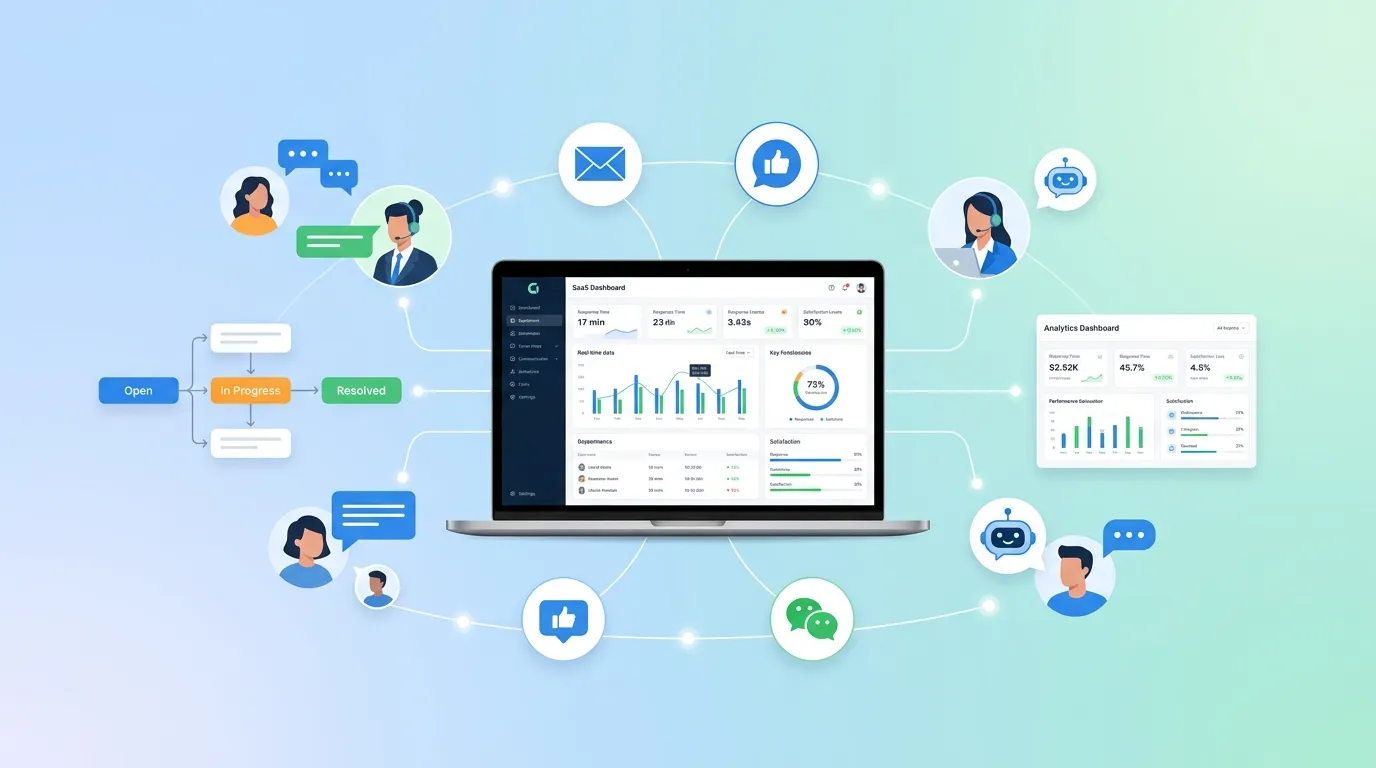
Digital support is the use of online tools like live chat, email, self-service portals, and AI-powered systems to help customers quickly and efficiently. It allows businesses to provide 24/7 assistance, reduce response times, and scale customer service without significantly increasing costs. By combining automation with human support, companies can improve customer satisfaction while streamlining operations.
Digital support is the practice of helping customers through online channels like live chat, email, self-service portals, and AI-powered tools. It lets businesses resolve issues faster, serve customers around the clock, and scale support without adding headcount—all while meeting the modern expectation of instant, convenient help.
Customers no longer want to wait on hold for 20 minutes to fix a simple problem. They expect answers fast, on the channel they prefer, at any hour of the day. That shift has pushed digital support from a nice-to-have into a core part of how successful businesses operate.
This guide breaks down everything you need to know about digital support—what it is, the tools that power it, and how to build a system that keeps customers happy without burning out your team. Whether you’re running a small online store or managing support for thousands of users, you’ll find practical insights you can put to work right away.
By the end, you’ll understand the key components of a strong digital support strategy, from live chat software to AI-powered solutions, and know how to choose the right setup for your needs.
What are digital customer support services?
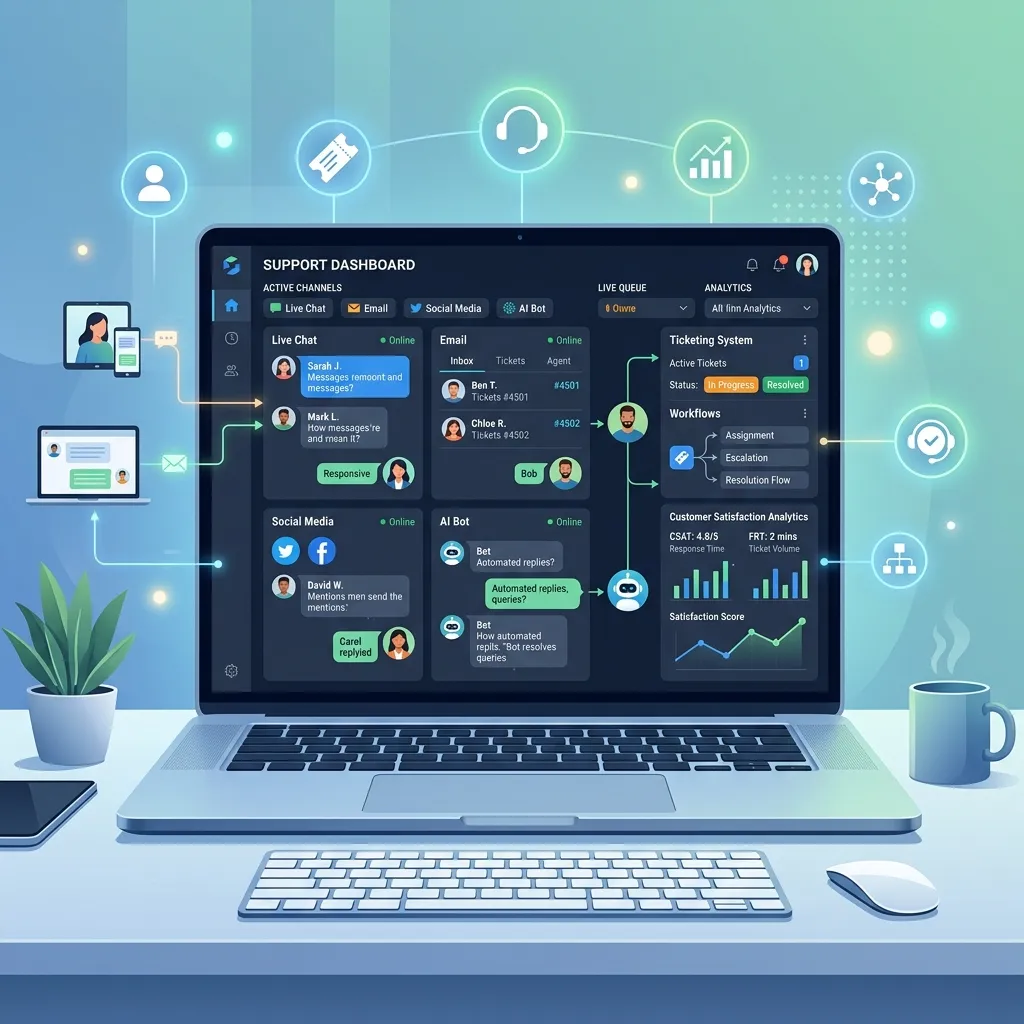
Digital customer support services are the tools and processes businesses use to help customers through online channels. Instead of relying only on phone lines or in-person visits, companies meet customers where they already are—on websites, apps, email, and social media.
These services cover a wide range of touchpoints:
- Live chat for real-time conversations on your website or app
- Email support for detailed, non-urgent requests
- Self-service portals with knowledge bases and FAQs
- Social media support through platforms like X and Facebook
- AI chatbots that handle common questions automatically
The goal is simple: solve problems quickly and conveniently. When done well, digital support reduces frustration, builds loyalty, and frees up your team to focus on the issues that truly need a human touch.
How do online technical support solutions work?
Online technical support solutions help customers troubleshoot and fix technical problems without needing someone on-site. They’re especially valuable for software companies, SaaS platforms, and any business with a digital product.
A typical online technical support solution combines several elements. First, there’s a ticketing system that logs every issue and tracks it through to resolution. Then there are diagnostic tools that let support agents view error logs, screen-share, or remotely access a customer’s device with permission. Finally, a knowledge base gives customers the option to solve simpler problems themselves.
The biggest advantage here is speed. An agent can identify and resolve a software bug in minutes rather than scheduling an on-site visit. This approach cuts costs for both the business and the customer while delivering faster outcomes.
Why does a 24/7 digital support helpdesk matter?
A 24/7 digital support helpdesk gives customers access to help at any time, regardless of time zone or business hours. For global companies, this isn’t optional—it’s expected.
Round-the-clock support delivers real benefits:
- Faster resolution times since customers don’t wait until morning
- Better global reach for businesses serving multiple time zones
- Higher satisfaction scores because help is always available
- Reduced backlog as issues get handled as they come in
You don’t need a fully staffed night shift to offer 24/7 support. Many businesses combine human agents during peak hours with AI chatbots and self-service resources that handle routine questions overnight. This hybrid model keeps costs reasonable while still meeting customer expectations.
What are remote IT support services?
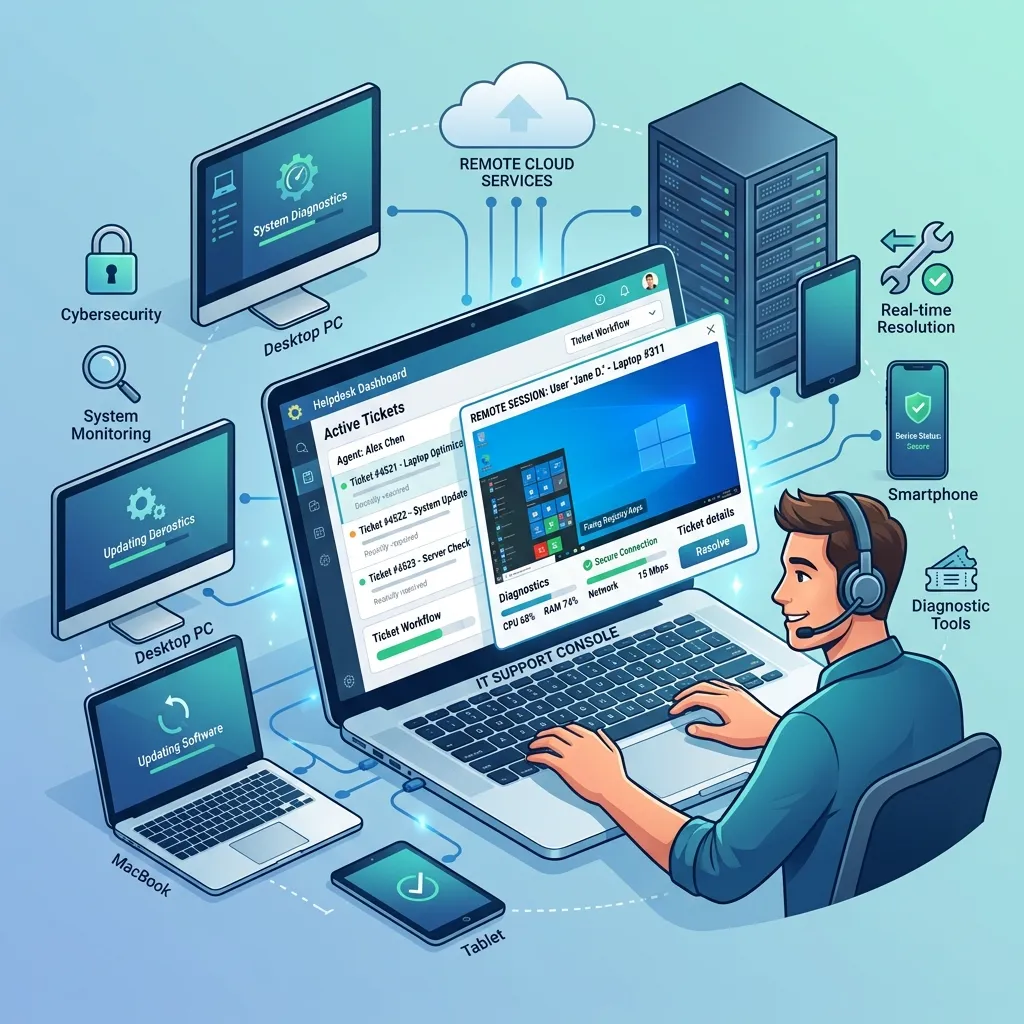
Remote IT support services let technicians diagnose and fix IT issues from a distance. Using secure remote-access software, a support agent can connect to a customer’s computer, server, or network to troubleshoot problems as if they were sitting right there.
This model has become standard for managed service providers and internal IT teams alike. Remote IT support handles everything from password resets and software installations to complex network configuration and security patches.
The shift to remote and hybrid work has made these services more important than ever. When employees work from home, an IT team can’t always walk over to a desk. Remote IT support fills that gap, keeping everyone productive no matter where they are.
What should you look for in a digital customer service platform?
A digital customer service platform brings all your support channels into one place. Instead of juggling separate tools for email, chat, and social media, your team manages everything from a single dashboard.
When choosing a platform, focus on these features:
- Omnichannel support that unifies email, chat, phone, and social media
- Automation to route tickets, send canned responses, and trigger workflows
- Analytics and reporting to track response times, resolution rates, and satisfaction
- Integrations with your CRM, e-commerce, and other business tools
- Scalability so the platform grows alongside your business
Choose a platform with strong automation if your team handles high volumes of repetitive questions. If personalized service matters more—say, for a high-touch B2B business—prioritize deep CRM integration and robust customer history tracking.
How does live chat support software improve customer experience?
Live chat support software lets customers get instant answers without leaving your website. Rather than digging for a phone number or waiting on an email reply, they type a question and get a response in real time.
The numbers back up its popularity. Live chat consistently earns some of the highest customer satisfaction ratings of any support channel, largely because it combines speed with convenience. Customers can multitask while they wait, and agents can handle several conversations at once.
Good live chat software does more than just enable conversations. It offers features like:
- Proactive chat that reaches out when a customer seems stuck
- Canned responses for common questions
- File sharing for screenshots and documents
- Chat history so customers don’t have to repeat themselves
- Chatbot handoff that escalates complex issues to a human agent
For e-commerce businesses, live chat can directly boost sales by answering pre-purchase questions at the exact moment a customer is deciding whether to buy.
What is virtual customer support assistance?

Virtual customer support assistance refers to help delivered by remote agents or AI-powered assistants rather than in-person staff. It spans a spectrum—from human agents working remotely to fully automated virtual assistants that handle queries on their own.
Virtual assistants powered by AI can answer FAQs, guide customers through troubleshooting steps, and even process simple transactions. When a question goes beyond their abilities, they route the customer to a human agent with full context already attached.
This blend of human and automated support is becoming the norm. It lets businesses handle high volumes efficiently while keeping the human element available for situations that genuinely need it.
Which digital help desk management tools should you use?
Digital help desk management tools organize and streamline how your team handles support requests. At their core, they turn a chaotic inbox into a structured, trackable workflow.
Key capabilities to look for include:
- Ticketing systems that capture, prioritize, and assign requests
- SLA management to ensure issues get resolved within agreed timeframes
- Knowledge base builders for self-service content
- Team collaboration features like internal notes and ticket assignment
- Performance dashboards that surface bottlenecks and trends
The right help desk tool depends on your team size. Smaller teams often do well with lightweight, affordable options, while larger operations benefit from enterprise-grade platforms with advanced automation and reporting.
Why are cloud-based support system services worth it?
Cloud-based support system services run on remote servers rather than local hardware, which means your team can access them from anywhere with an internet connection. This flexibility has made cloud solutions the default choice for modern support teams.
The advantages are hard to ignore:
- Lower upfront costs since there’s no hardware to buy or maintain
- Easy scalability as you can add seats or features on demand
- Automatic updates that keep your system current without manual work
- Remote accessibility for distributed and hybrid teams
- Built-in reliability with provider-managed backups and uptime
For most businesses, especially those with remote workers, cloud-based support systems offer a better balance of cost, flexibility, and reliability than on-premise alternatives.
How are AI-powered customer support solutions changing the game?
AI-powered customer support solutions use machine learning and natural language processing to automate and enhance support. They handle a growing share of customer interactions—and they keep getting smarter.
Here’s where AI makes the biggest impact:
- Instant responses through chatbots that answer common questions 24/7
- Smart routing that sends tickets to the right agent automatically
- Sentiment analysis that flags frustrated customers for priority handling
- Suggested replies that help agents respond faster and more consistently
- Predictive support that spots issues before customers even report them
AI doesn’t replace human agents—it makes them more effective. By taking routine questions off their plate, AI frees up your team to focus on complex, high-value interactions where human empathy and judgment matter most.
Choose AI-powered solutions if your support volume is high and many of your queries are repetitive. The investment pays off quickly through reduced workload and faster resolution times.
Building your digital support strategy
Digital support has moved from a competitive edge to a baseline expectation. Customers want fast, convenient help on their terms, and the businesses that deliver it earn loyalty that lasts.
The good news is that you don’t need to adopt everything at once. Start by identifying where your customers struggle most. If they’re abandoning carts over unanswered questions, live chat is a smart first step. If your team is drowning in repetitive tickets, an AI chatbot or self-service knowledge base will lighten the load.
From there, build toward an integrated system—ideally a cloud-based platform that unifies your channels, automates routine work, and gives you the data to keep improving. The strongest digital support strategies combine smart technology with skilled human agents, each doing what they do best.
Take stock of your current setup, pick one area to improve, and build from there. Your customers—and your support team—will thank you.
Frequently asked questions
What’s the difference between digital support and traditional customer support?
Traditional customer support relies on phone calls and in-person help, while digital support uses online channels like live chat, email, self-service portals, and AI chatbots. Digital support is generally faster, more scalable, and available around the clock.
How much do digital customer support services cost?
Costs vary widely based on your needs. Many live chat and help desk tools start at $15–$50 per agent per month, while enterprise platforms with advanced AI and automation cost more. Self-service and AI chatbots can lower your per-ticket cost significantly over time.
Can small businesses benefit from AI-powered customer support?
Yes. AI-powered solutions like chatbots and automated routing help small businesses handle more requests without hiring extra staff. Many tools offer affordable plans designed specifically for smaller teams, making AI support accessible even on a tight budget.
Is cloud-based support secure?
Reputable cloud-based support providers invest heavily in security, including encryption, regular backups, and compliance with standards like GDPR and SOC 2. For most businesses, a trusted cloud provider offers stronger security than they could maintain on their own hardware.
How do I choose the right digital support platform?
Start with your biggest pain point and your team size. Look for omnichannel support, automation, analytics, and integrations with your existing tools. Prioritize automation if you handle high volumes, or deep CRM integration if personalized service is your priority.