
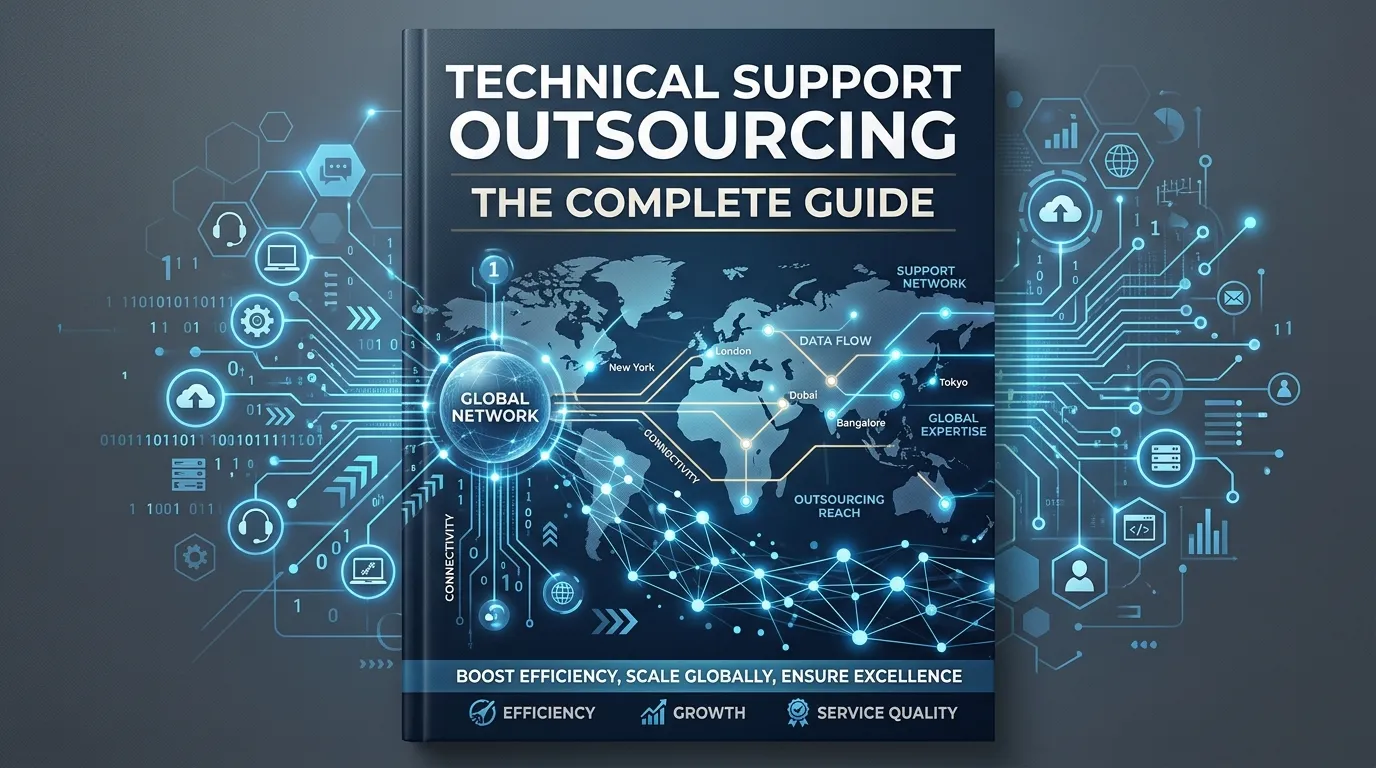
A Technical Support Outsourcing Service helps businesses reduce IT costs, improve response times, and provide expert technical assistance without building a large in-house team. From help desk support to managed IT services and 24/7 customer support, outsourcing enables organizations to scale efficiently while improving customer satisfaction and operational reliability.
Technical support outsourcing means hiring a third-party provider to handle your IT and customer support needs. Businesses outsource technical support to reduce costs, access 24/7 coverage, and tap into specialized expertise without the overhead of building an in-house team.
Your support team gets a ticket at 2 a.m. on a Sunday. A customer can’t access their account. Your system is throwing errors no one on the payroll has seen before. If your business doesn’t have the people or the infrastructure to respond quickly, that customer is gone—and they’re probably telling others about it.
This is the reality that’s pushing more businesses toward outsourced technical support. What was once a cost-cutting tactic for large corporations has become a strategic necessity for companies of all sizes. From startups scaling fast to enterprises managing complex IT ecosystems, outsourcing technical support gives organizations the flexibility and expertise they need without the cost and complexity of building everything in-house.
This guide covers everything you need to know about IT support outsourcing services—what they include, how to choose the right provider, and how to evaluate whether outsourcing is the right move for your business.
What Is Technical Support Outsourcing?
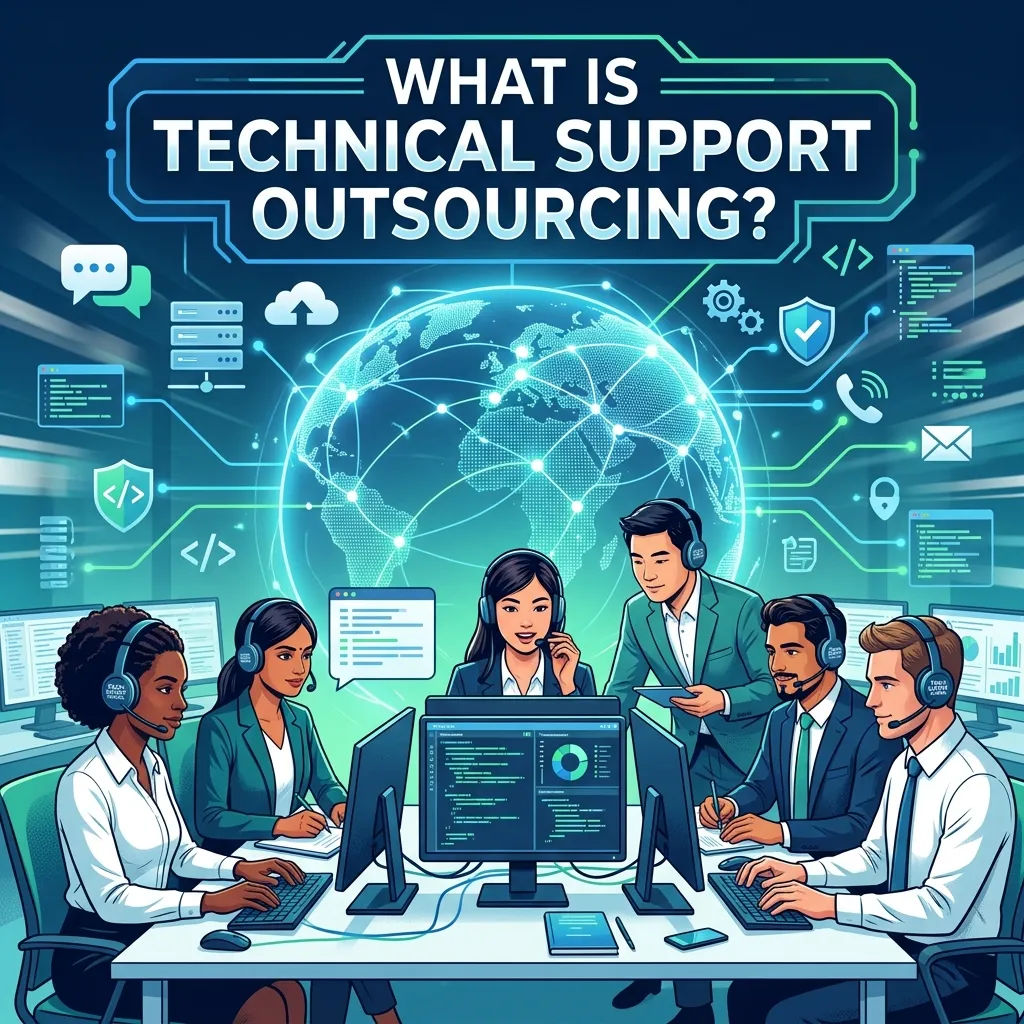
Outsourced technical support is the practice of contracting an external provider to manage some or all of your technical and IT support functions. These providers—often called technical support service providers or managed IT support companies—handle everything from frontline help desk queries to complex infrastructure management.
The scope of what can be outsourced is broad:
- Help desk outsourcing: Handling end-user support tickets, password resets, software troubleshooting, and basic hardware issues
- Remote technical support services: Diagnosing and resolving issues through remote desktop tools without dispatching on-site technicians
- Managed IT support services: Proactive management of your entire IT environment, including monitoring, patching, and security
- Outsourced customer technical support: Supporting your customers directly on product-related technical issues, often as a white-label extension of your brand
Each model serves a different need. A SaaS company might outsource customer-facing technical support to a specialized provider, while a mid-sized manufacturer might opt for a fully managed IT support arrangement that covers their internal systems and employees.
Why Businesses Choose to Outsource Technical Support
Cost savings are often cited as the primary reason for outsourcing, but the full picture is more nuanced. Here’s what actually drives the decision for most organizations.
Access to Specialized Expertise
Building an internal team that covers networking, cybersecurity, cloud infrastructure, hardware, and software support is expensive and time-consuming. IT support outsourcing services give businesses immediate access to teams with deep, specialized knowledge across all of these areas.
This is especially valuable for small and mid-sized businesses that can’t justify full-time specialists in every technical domain.
24/7 Technical Support Services Without the Overhead
Hiring around the clock internally means multiple shifts, holiday pay, and significant HR complexity. A 24/7 technical support service provider absorbs all of that. Customers and employees get support whenever they need it—without the business bearing the full cost of overnight staffing.
According to a report by Statista, the global IT outsourcing market was valued at over $617 billion in 2023 and continues to grow, driven largely by demand for round-the-clock service capabilities and cost efficiency.
Faster Scaling
When your business grows quickly, your support needs grow with it. Outsourced technical support scales with demand—adding capacity during peak periods, adjusting service tiers as your team or customer base expands, and spinning up new support functions without long hiring cycles.
Reduced Risk
Reputable technical support service providers operate under Service Level Agreements (SLAs) that define response times, resolution rates, and uptime guarantees. This accountability is difficult to replicate with an internal team that has no formal performance framework.
What Do IT Support Outsourcing Services Actually Include?
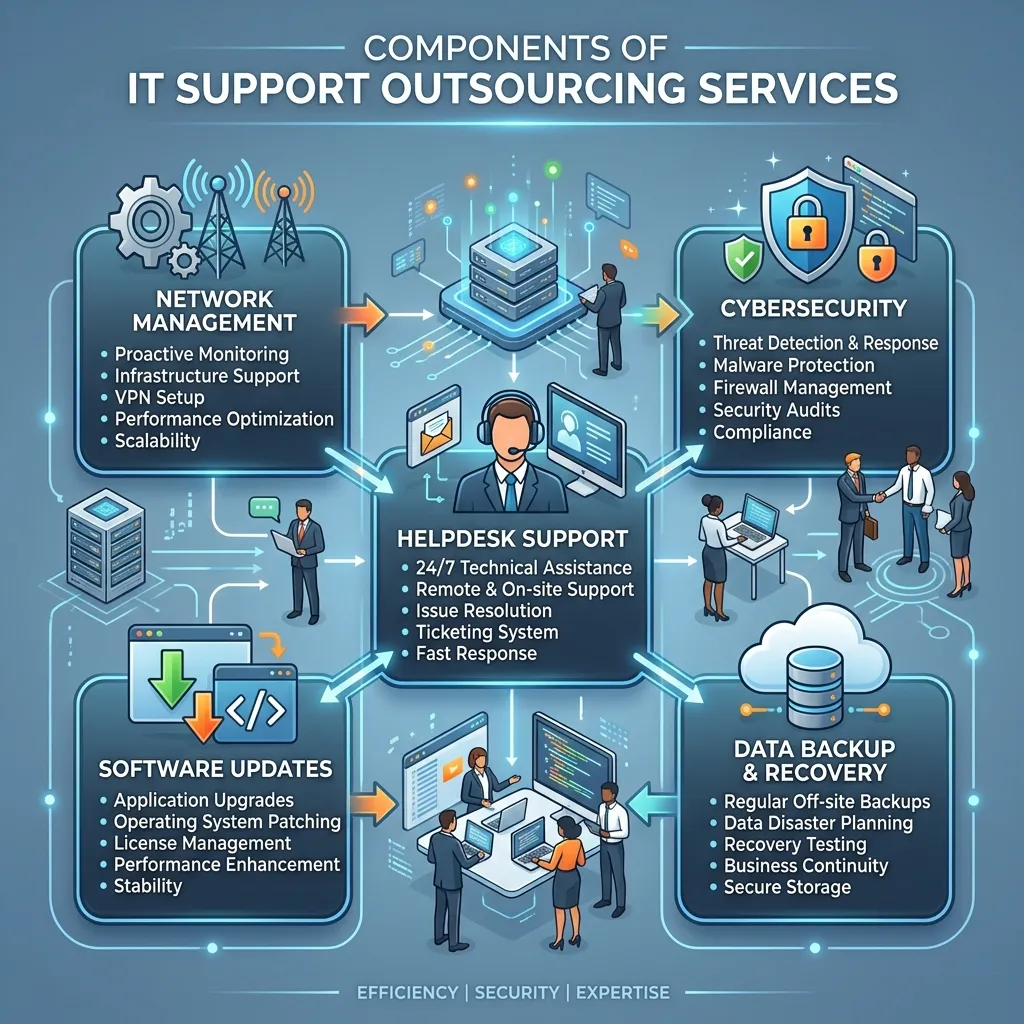
The specifics depend on the provider and the service model, but most IT support outsourcing services fall into one of the following categories.
Help Desk Outsourcing
Help desk outsourcing covers Tier 1 and Tier 2 support—the frontline of technical assistance. This includes responding to support tickets, troubleshooting common software issues, managing user accounts, and escalating more complex problems.
For many businesses, help desk outsourcing is the entry point. It relieves internal teams of high-volume, repetitive tasks so they can focus on higher-value work.
Remote Technical Support Services
Remote technical support services handle issues without on-site visits. Using remote access tools and diagnostics, technicians can resolve the majority of technical problems—configuring systems, removing malware, fixing connectivity issues, or walking users through complex software—from anywhere in the world.
Remote support is faster, cheaper, and more flexible than on-site alternatives. For geographically distributed teams, it’s often the only practical option.
Managed IT Support Services
Managed IT support goes beyond reactive troubleshooting. A managed service provider (MSP) takes a proactive role in maintaining your IT environment—monitoring systems for issues before they become outages, applying security patches, managing backups, and ensuring compliance with relevant regulations.
This model suits businesses that want to minimize IT disruptions and reduce the risk of downtime. Instead of paying for support only when something breaks, managed IT support operates on a predictable monthly fee that covers ongoing maintenance and oversight.
Enterprise IT Support Outsourcing
Large organizations have more complex needs. Enterprise IT support outsourcing typically involves multi-tiered support structures, custom SLAs, integration with internal IT teams, and dedicated account management.
Providers specializing in enterprise IT support outsourcing often have experience with specific industries—financial services, healthcare, manufacturing—and can navigate the compliance requirements and security standards that come with them.
Outsourced Customer Technical Support
Some businesses outsource technical support not for internal IT, but for their customers. Outsourced customer technical support providers work as an extension of your brand, handling product-related questions, troubleshooting customer issues, and resolving technical complaints.
This model works well for software companies, e-commerce platforms, and any business where customers interact frequently with technical products.
How to Choose the Right Technical Support Service Provider
Not all providers are equal. Here’s what to evaluate when choosing a technical support service provider.
Define Your Support Scope First
Before engaging any provider, clarify what you need. Are you looking for internal IT support, customer-facing technical assistance, or both? Do you need 24/7 coverage or just extended business hours? Is your priority response speed, technical depth, or cost?
The answers determine which type of provider and which service model fits your needs.
Evaluate Technical Expertise and Certifications
Look for providers whose teams hold recognized certifications—CompTIA, Microsoft Certified Professional, ITIL, or industry-specific credentials. Certifications indicate a baseline of competence and commitment to professional development.
Ask about experience in your specific industry. A provider experienced in healthcare IT will understand HIPAA compliance in a way a generalist may not.
Review SLAs Carefully
SLAs define what you’re paying for. Review them in detail. Key metrics include:
- First response time: How quickly a technician acknowledges a ticket
- Resolution time: How long it takes to resolve issues at each severity level
- Uptime guarantees: Relevant for managed IT support services
- Escalation procedures: How complex issues are handled and by whom
A provider that won’t negotiate or clearly define these metrics is a red flag.
Consider Communication and Cultural Fit
Technical support outsourcing often involves working with offshore teams. While this can significantly reduce costs, communication gaps, language barriers, and time zone differences can affect service quality. Assess how well potential providers communicate during the sales process—it usually reflects how they’ll communicate as a partner.
Check References and Case Studies
Ask for references from clients in your industry or of a similar size. A reliable technical support service provider will have no hesitation connecting you with existing customers.
Common Risks of Outsourcing Technical Support and How to Mitigate Them
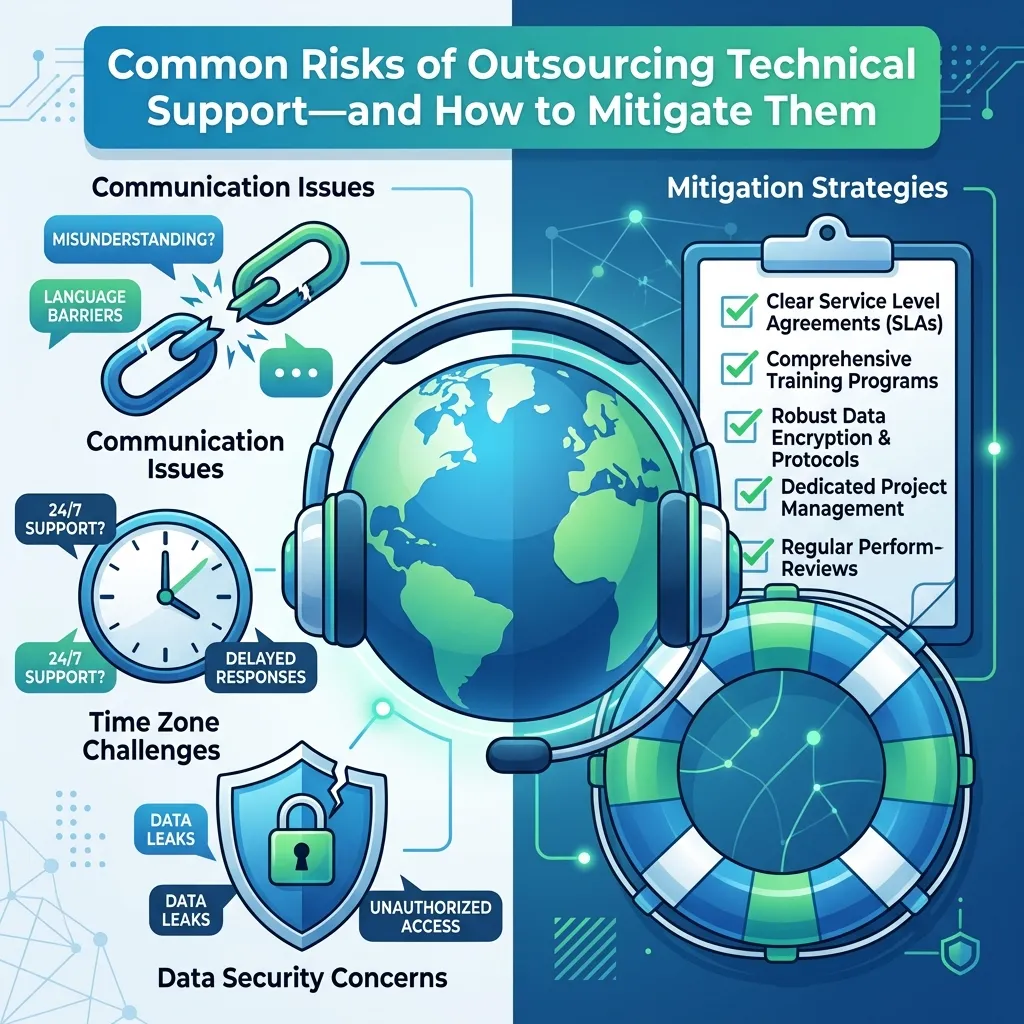
Outsourcing isn’t risk-free. Here are the most common issues businesses encounter and how to address them.
Loss of institutional knowledge: External teams won’t know your systems as well as internal staff. Mitigate this with thorough onboarding documentation and a knowledge base that your provider can access and update.
Security concerns: Granting external access to your systems introduces risk. Ensure your provider has robust security certifications (ISO 27001, SOC 2) and that contracts include clear data handling and confidentiality provisions.
Service quality inconsistency: Support quality can vary depending on which technician handles a ticket. Consistent quality comes from strong provider training programs, detailed SOPs, and regular performance reviews.
Lack of alignment with company culture: An outsourced team that doesn’t understand your brand voice or values can create poor customer experiences. Invest time in onboarding and provide communication guidelines.
Is Outsourced Technical Support Right for Your Business?
Outsourcing technical support makes the most sense for businesses that:
- Struggle to staff support roles cost-effectively in their local market
- Need coverage outside standard business hours
- Are growing quickly and need support capacity that scales with them
- Lack the internal expertise to handle complex technical issues
- Want predictable IT costs through a managed service model
It’s less suitable for organizations where support requires deep institutional knowledge that’s difficult to transfer, or where regulatory requirements mandate internal control of IT functions.
The Future of IT Support Outsourcing
The technical support outsourcing market is evolving rapidly. AI-powered ticketing systems, automated diagnostics, and chatbot-assisted Tier 1 support are changing how providers deliver service—reducing resolution times and lowering costs. Meanwhile, demand for cybersecurity expertise within outsourced IT teams is growing as threat complexity increases.
Businesses that view outsourced technical support as a strategic function—not just a cost reduction measure—will be better positioned to adapt as these capabilities evolve.
Ready to Outsource Your Technical Support?
Choosing the right technical support service provider takes time, but the payoff is significant. Reduced overhead, faster response times, and access to expertise that would be impractical to build internally—these are real, measurable advantages for businesses that get the model right.
Start by defining your support scope clearly, then evaluate providers against the criteria outlined in this guide. Request SLAs in writing, check references, and don’t settle for a provider that can’t demonstrate experience in your industry.
The right partner won’t just handle your tickets. They’ll strengthen your operations, protect your systems, and help you deliver better experiences to your customers and employees—around the clock.
Frequently Asked Questions
What is the difference between outsourced technical support and managed IT support services?
Outsourced technical support typically refers to reactive help desk and troubleshooting services—resolving issues as they arise. Managed IT support services are proactive, involving ongoing monitoring, maintenance, and management of your IT environment to prevent problems before they occur.
How much does IT support outsourcing cost?
Costs vary depending on the scope, model, and provider location. Help desk outsourcing can start at a few dollars per ticket or user per month. Managed IT support services typically range from $100 to $300 per user per month for comprehensive coverage. Enterprise IT support outsourcing is generally priced on a custom basis.
Can I outsource only part of my technical support function?
Yes. Many businesses start with partial outsourcing—handing off Tier 1 help desk tickets while keeping complex infrastructure work in-house. This hybrid model lets you scale outsourcing incrementally as you build confidence in your provider.
What industries benefit most from outsourced technical support?
Technology, healthcare, financial services, e-commerce, and manufacturing all benefit significantly from IT support outsourcing. Industries with compliance requirements—such as healthcare and finance—should ensure their provider has relevant certifications and experience.
How do I ensure data security when outsourcing technical support?
Require providers to hold recognized security certifications such as ISO 27001 or SOC 2 Type II. Include data handling, confidentiality, and breach notification clauses in your contract. Limit access to only the systems and data your provider needs to perform their work.
What should a technical support SLA include?
A solid SLA should define first response times by ticket severity, target resolution times, uptime guarantees (for managed services), escalation procedures, and reporting frequency. It should also specify consequences—such as service credits—if the provider fails to meet agreed targets.