


Customer support services help businesses deliver fast, consistent, and personalized assistance across channels like live chat, help desks, email, and phone support. By combining the right tools, trained teams, and customer-focused strategies, businesses can improve satisfaction, increase retention, and drive long-term growth.
Effective customer support services combine the right tools, trained teams, and omnichannel strategies to resolve issues quickly and retain customers long-term. Businesses that invest in structured support systems—including live chat, help desks, and technical support—consistently outperform competitors in customer satisfaction and revenue growth.
Customer support has come a long way from call centers and email threads. Today, customers expect fast, personalized, and consistent help across every channel they use. Miss the mark, and they’ll find a competitor who doesn’t.
The stakes are real. According to Salesforce’s State of the Connected Customer report, 88% of customers say the experience a company provides matters as much as its products or services. Yet many businesses still treat support as an afterthought—understaffed, underfunded, and reactive rather than proactive.
This guide covers everything you need to build a customer support operation that actually works: the right tools, the right structure, and the strategies that keep customers coming back. Whether you’re building a support function from scratch or optimizing an existing one, you’ll find actionable guidance across every major area of customer service.
What Are Customer Support Solutions—and Why Do They Matter?

Customer support solutions are the tools, platforms, and processes businesses use to assist customers before, during, and after a purchase. These range from help desk software and live chat platforms to AI-powered chatbots and self-service knowledge bases.
The right solution depends on your business size, customer base, and the complexity of the issues your team handles. A SaaS company managing technical onboarding queries has different needs than an e-commerce brand handling shipping complaints. What they share, however, is the same core objective: resolve customer issues quickly, accurately, and with minimal friction.
Investing in the right support solutions isn’t just a customer experience play—it’s a business strategy. Companies with strong customer service grow revenue 4–8% above their market, according to Bain & Company research.
How to Build an Effective Customer Support Management System
Strong customer support management starts with structure. Without clear processes, even the most talented support teams become reactive and inconsistent.
Define roles and responsibilities clearly
Every support team needs defined tiers. Tier 1 handles common, lower-complexity queries. Tier 2 manages escalations and more technical issues. Tier 3 involves product specialists or engineers for deep technical problems. Clear escalation paths reduce resolution times and prevent customers from being bounced between agents.
Use data to manage performance
Tracking the right metrics is essential. Key performance indicators (KPIs) for customer support management include:
- First Response Time (FRT): How quickly does your team acknowledge an inquiry?
- Average Handle Time (AHT): How long does it take to fully resolve an issue?
- First Contact Resolution (FCR): What percentage of issues are resolved without follow-up?
- Customer Satisfaction Score (CSAT): How satisfied are customers after each interaction?
Reviewing these metrics regularly helps identify bottlenecks, training gaps, and opportunities to improve efficiency.
Invest in agent training and enablement
Support teams perform best when agents are equipped with product knowledge, communication skills, and access to up-to-date resources. Regular training sessions, internal knowledge bases, and peer coaching all contribute to a higher-performing team.
Customer Experience Optimization: Moving Beyond Issue Resolution
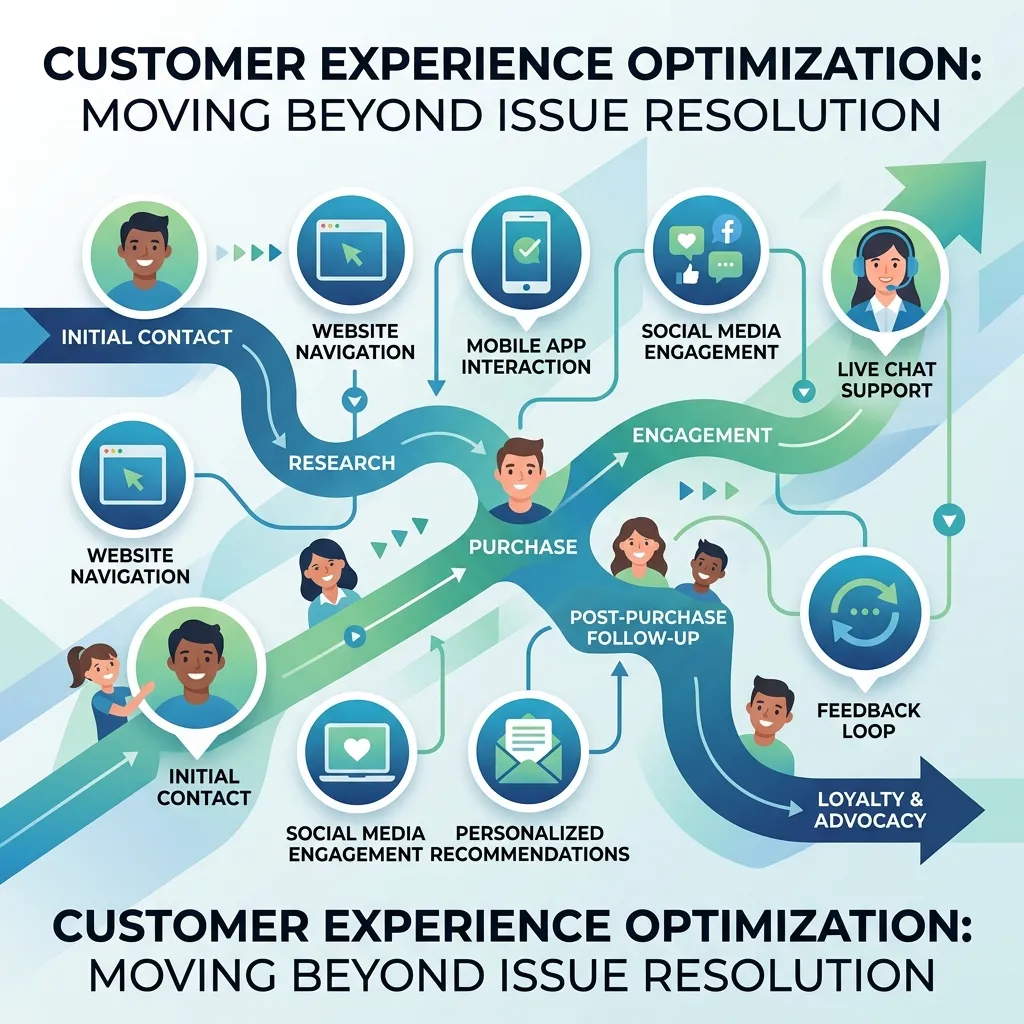
Resolving tickets isn’t enough. The businesses that build lasting loyalty treat every support interaction as an opportunity to strengthen the customer relationship.
Customer experience optimization involves mapping the full support journey—from initial contact to post-resolution follow-up—and identifying friction points at every stage. Common friction points include long wait times, inconsistent information across channels, and the need to repeat context to multiple agents.
Reducing that friction requires both process improvements and technology investments. Unified customer profiles, for example, give agents instant access to a customer’s history, preferences, and previous interactions. This allows agents to provide context-aware support from the first message, rather than asking customers to start from scratch every time.
Post-resolution follow-ups—a quick email or survey after a ticket is closed—also go a long way. They signal to customers that your team cares about outcomes, not just ticket closures.
What Is a Customer Help Desk—and Do You Need One?
A customer help desk is a centralized platform for managing, tracking, and resolving customer inquiries. Help desk software like Zendesk, Freshdesk, and HubSpot Service Hub bring all customer communication into one place, making it easier for teams to collaborate and maintain consistency.
Help desks are particularly valuable for growing teams managing high volumes of support requests across multiple channels. Without one, it’s easy for tickets to fall through the cracks, especially when queries arrive via email, chat, social media, and phone simultaneously.
Key features to look for in a help desk platform include:
- Ticketing system: Assign, prioritize, and track every customer inquiry
- Automation rules: Route tickets to the right agent based on topic, language, or urgency
- Reporting dashboards: Monitor team performance and spot trends over time
- Knowledge base integration: Empower customers to find answers independently
For small teams just starting out, many platforms offer free tiers with core functionality. Scaling businesses typically benefit from paid plans that include advanced automation, integrations, and analytics.
Technical Support Services: Handling Complex Customer Issues

Technical support services cover the assistance businesses provide for product-specific or technology-related issues—think software bugs, account access problems, API integrations, and hardware troubleshooting.
Effective technical support requires more than empathy; it demands deep product knowledge and structured diagnostic processes. Teams that lack clear troubleshooting frameworks waste time on back-and-forth conversations that could be resolved in a single, well-structured response.
Best practices for technical support teams include:
- Creating detailed internal documentation for known issues and their resolutions
- Using screen sharing and co-browsing tools for complex visual problems
- Establishing SLAs (Service Level Agreements) that define response and resolution time expectations based on issue severity
- Logging bugs and patterns and feeding that information back to product teams to prevent recurring issues
Technical support is also where self-service content earns its keep. A well-maintained knowledge base or FAQ section can deflect up to 30% of inbound tickets, according to Forrester Research—freeing up agents to focus on genuinely complex cases.
Omnichannel Customer Support: Meeting Customers Where They Are
Omnichannel customer support means providing consistent, connected service across every channel a customer uses—email, live chat, phone, social media, in-app messaging, and more.
The distinction between omnichannel and multichannel support is important. Multichannel means being present on multiple platforms. Omnichannel means those platforms are integrated, so a customer can start a conversation on Instagram, continue it via email, and pick it up on live chat—without ever having to repeat themselves.
Research from Aberdeen Group found that companies with strong omnichannel support strategies retain an average of 89% of their customers, compared to 33% for those with weak omnichannel engagement.
Achieving true omnichannel support requires a unified platform that consolidates all communication channels and maintains a single customer record across them. Without that, agents operate in silos and customers pay the price.
Live Chat Support Services: The Fast Lane for Customer Queries
Live chat has become one of the most preferred support channels, particularly among younger customers. A Forrester study found that 44% of online consumers say that having a live person answer questions during an online purchase is one of the most important features a website can offer.
Live chat support services deliver value in several key ways:
- Speed: Customers receive help in real time, without waiting on hold or checking their inbox
- Efficiency: Agents can handle multiple chats simultaneously, increasing team throughput
- Conversion: For e-commerce and SaaS businesses, live chat support at key decision points can directly reduce cart abandonment and trial drop-off
AI-powered chatbots have extended the reach of live chat by handling common queries outside business hours. The best implementations use a hybrid model—chatbots triage and handle straightforward requests, while seamlessly handing off to human agents for complex or sensitive issues.
Customer Satisfaction Strategies That Actually Work
Customer satisfaction doesn’t happen by accident. It results from deliberate strategies, consistently applied.
Personalize every interaction. Use customer data to tailor responses. Addressing a customer by name and referencing their specific order or account history immediately signals that your team sees them as an individual, not a ticket number.
Set and meet expectations. If resolution will take 24 hours, say so upfront. Customers are far more tolerant of wait times when they know what to expect. Broken promises—even small ones—erode trust quickly.
Empower agents to resolve issues. When agents constantly need manager approval for refunds, replacements, or exceptions, resolution times suffer and customers feel deprioritized. Giving frontline agents clear authority to make decisions within defined parameters leads to faster, more satisfying resolutions.
Collect and act on feedback. CSAT surveys and Net Promoter Score (NPS) surveys provide direct insight into what’s working and what isn’t. More importantly, acting on that feedback—and communicating those changes to customers—demonstrates that their input leads to real improvements.
Customer Retention Through Support: The Long-Term Payoff
Every support interaction is either a retention opportunity or a churn risk. The math is straightforward: acquiring a new customer costs 5–7 times more than retaining an existing one, according to research from Frederick Reichheld at Bain & Company.
Support teams that understand their role in retention approach every interaction differently. They’re not just resolving issues—they’re protecting relationships. This mindset shift changes how agents communicate, how urgently issues are prioritized, and how teams handle customers who are at risk of churning.
Proactive support is one of the most effective retention tools available. Rather than waiting for customers to report problems, proactive teams identify potential issues early—through product usage data, support ticket trends, or account health scores—and reach out before frustration sets in.
Customer success programs, which blend support with strategic guidance, are particularly common in B2B SaaS. Dedicated customer success managers help clients get more value from the product, reducing churn by turning passive users into active advocates.
Customer Service Best Practices for High-Performing Teams
Bringing it all together, here are the core customer service best practices that consistently distinguish high-performing support teams from the rest:
- Respond fast, even if resolution takes time. Acknowledging an inquiry promptly reduces anxiety and sets a professional tone.
- Speak the customer’s language. Avoid internal jargon. Use plain, clear language that matches the customer’s level of technical familiarity.
- Close the loop on every ticket. Ensure customers know their issue has been resolved—and invite them to re-open the ticket if problems persist.
- Build a culture of continuous improvement. Regularly review resolved tickets, identify patterns, and update processes and documentation accordingly.
- Celebrate support wins internally. Positive customer feedback should be shared across the team. Recognition reinforces the behaviors that generate great experiences.
Building a Support Function That Drives Business Growth
Customer support services have evolved from a necessary cost center into one of the most powerful growth levers a business can build. The companies winning on customer experience aren’t doing anything magical—they’re combining the right tools, clear processes, and empowered teams to deliver consistent value at every touchpoint.
The areas covered in this guide—help desk management, omnichannel integration, live chat, technical support, and proactive retention strategies—don’t need to be implemented all at once. Start by auditing where your current support operation creates the most friction for customers. Fix that first. Then build outward from there.
A strong support function doesn’t just solve problems. It builds the kind of trust that turns one-time buyers into long-term customers—and long-term customers into advocates.
Frequently Asked Questions
What is the difference between customer service and customer support?
Customer service refers to the broader relationship between a business and its customers, including sales guidance and general assistance. Customer support is a subset of customer service, focused specifically on resolving product or service-related issues after a purchase has been made.
What tools are commonly used for customer support management?
Popular customer support tools include Zendesk, Freshdesk, HubSpot Service Hub, Intercom, and Salesforce Service Cloud. The best tool depends on team size, budget, and the channels your customers use most frequently.
How does omnichannel support differ from multichannel support?
Multichannel support means being present on multiple platforms (email, chat, phone, social). Omnichannel support means those platforms are integrated, so customers receive consistent, connected service regardless of which channel they use—without needing to repeat their context.
What is a good customer satisfaction score (CSAT)?
A CSAT score above 80% is generally considered strong across most industries. However, benchmarks vary by sector. Technology companies and e-commerce brands often target scores above 85%, while industries with more complex service interactions may benchmark lower.
How can small businesses improve customer support without a large team?
Small businesses can improve support efficiency by investing in a shared inbox tool or lightweight help desk, building a self-service knowledge base, using chatbots for after-hours coverage, and setting clear response time expectations with customers. Quality matters more than volume—even a small team can deliver excellent support with the right processes in place.
What metrics should I track to measure customer support performance?
The most important metrics for customer support are First Response Time (FRT), Average Handle Time (AHT), First Contact Resolution (FCR), Customer Satisfaction Score (CSAT), and Net Promoter Score (NPS). Tracking these consistently helps identify performance trends and areas for improvement.
Why are customer support services important for business growth?
Customer support services help businesses build trust, improve customer satisfaction, and increase retention, all of which contribute to long-term revenue growth.
What channels should customer support services include?
Modern customer support services should include email, phone, live chat, social media, self-service knowledge bases, and mobile support channels to meet customer expectations.
How do customer support services improve customer loyalty?
Customer support services improve loyalty by resolving issues quickly, providing personalized assistance, and creating positive customer experiences that encourage repeat business.
Can small businesses benefit from customer support services?
Yes. Even small businesses can use customer support services to strengthen customer relationships, improve response times, and compete more effectively with larger companies.
What role does automation play in customer support services?
Automation helps customer support services handle routine inquiries, route tickets efficiently, and provide instant responses through chatbots, allowing agents to focus on complex issues.
How can businesses measure the success of customer support services?
Businesses can evaluate customer support services using metrics such as Customer Satisfaction Score (CSAT), First Response Time (FRT), First Contact Resolution (FCR), and customer retention rates.
What are the benefits of live chat customer support services?
Live chat customer support services provide real-time assistance, reduce wait times, improve customer satisfaction, and can help increase conversions during the buying process.
How do customer support services reduce customer churn?
Customer support services reduce churn by addressing problems quickly, maintaining clear communication, and ensuring customers receive value throughout their relationship with the business.
What is the difference between customer support services and technical support services?
Customer support services cover general customer assistance and account-related issues, while technical support services focus on troubleshooting product, software, or hardware problems.
How can businesses improve their customer support services?
Businesses can improve customer support services by investing in staff training, implementing help desk software, offering omnichannel support, and regularly collecting customer feedback.