

Email marketing helps SEO indirectly by driving targeted traffic, improving engagement, and increasing the chances of shares and backlinks. While not a direct ranking factor, email campaigns support SEO by sending consistent visitors to your content and strengthening on-site behavior signals over time. Together, email marketing and SEO create a strong system for long-term organic growth.
Email marketing helps SEO indirectly by driving traffic to your content, boosting user engagement signals, encouraging social shares and backlinks, and keeping visitors on your site longer. While email isn’t a direct ranking factor, a strong email marketing strategy amplifies the reach of your content—which search engines reward over time.
Plenty of marketers treat email and SEO as two separate worlds. One lives in your inbox, the other on Google’s results pages. But the truth is they work better together than apart.
Email won’t directly push you to page one. Google has confirmed that email opens, clicks, and newsletter signups aren’t ranking signals. So why does email keep showing up in conversations about better rankings? Because the effects of good email marketing—more traffic, more engagement, more shares, more links—are exactly the things search engines pay attention to.
This guide breaks down how email marketing supports your SEO efforts, the strategies that make the biggest difference, and the steps you can take to connect the two. By the end, you’ll have a clear plan to use your subscriber list as a tool for stronger search performance.
Does email marketing directly affect SEO rankings?

No, email marketing is not a direct ranking factor. Google’s crawlers don’t see your emails, and metrics like open rates or click-through rates don’t feed into its algorithm.
The connection is indirect but powerful. When email drives the right people to your website, it sets off a chain reaction of positive behaviors—longer visits, more pages viewed, social shares, and sometimes backlinks. Search engines treat these signals as evidence that your content is valuable, and that can help your rankings climb.
Think of email as the spark and SEO as the slow burn. The spark gets readers to your content quickly. The burn keeps that content visible long after the email campaign ends.
How does email marketing increase website traffic?
Email is one of the few channels you fully own. You don’t rent your audience from a social platform or pay per click—you talk directly to people who chose to hear from you. That makes it a reliable way to increase website traffic with email marketing.
Here’s how it works in practice:
- You publish new content. A blog post, a guide, or a case study goes live on your site.
- You send it to your list. Subscribers get a direct link to that content in their inbox.
- They click through. Each click becomes a real visit—often within minutes of hitting send.
That early burst of traffic matters more than it looks. New content with no visitors gives search engines little to work with. A wave of engaged readers signals that the page deserves attention, helping it get indexed and evaluated faster.
The best part? This traffic is repeatable. Every campaign you send is another chance to drive organic traffic back to your highest-value pages.
What role does email play in content promotion and distribution?
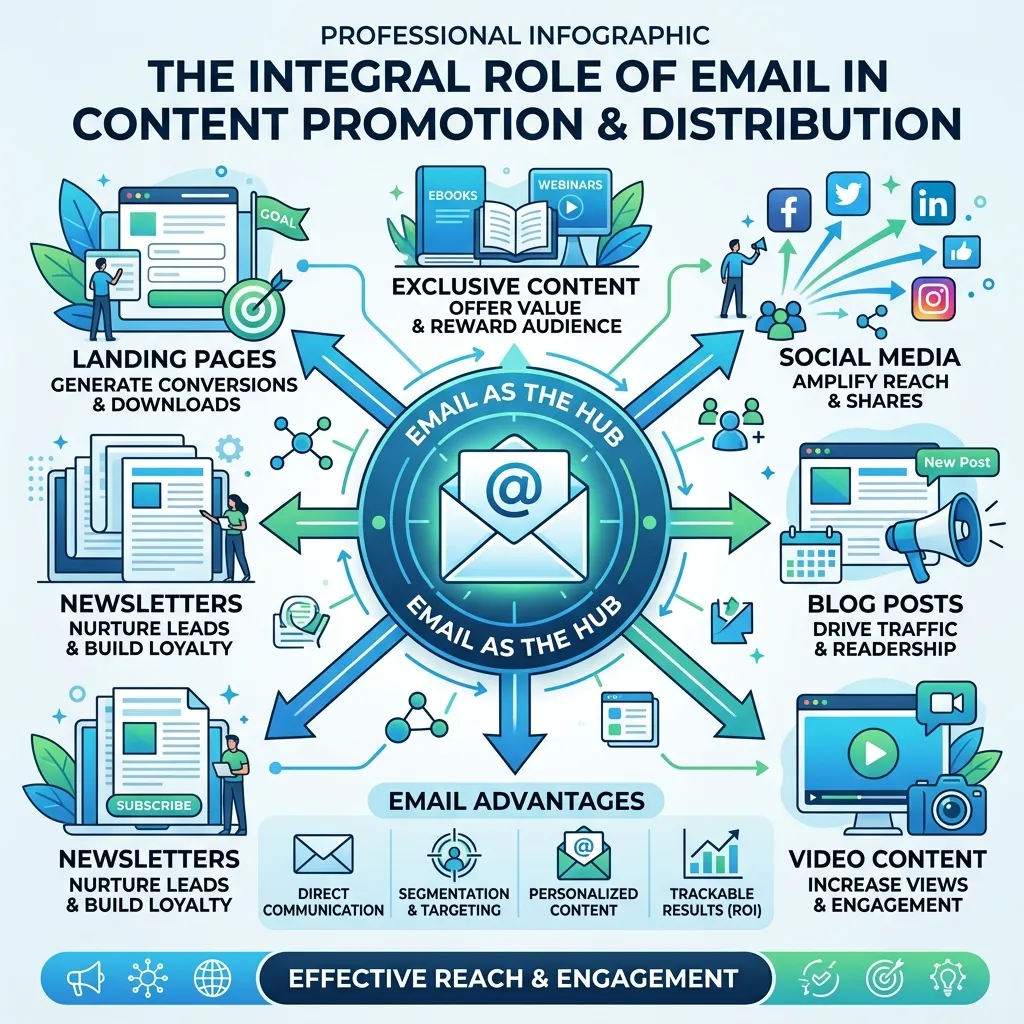
Content promotion through email is one of the simplest ways to get more eyes on what you publish. A great article does nothing if no one reads it. Email solves the discovery problem instantly.
A smart content distribution strategy uses email at several stages:
Announce new content
Send a short, focused email each time you publish something worth reading. Lead with the value, not the headline. Tell subscribers exactly what they’ll learn and why it matters to them.
Resurface evergreen pieces
Your best-performing posts don’t expire. Schedule periodic emails that point back to high-value guides, tutorials, and resources. This keeps older URLs earning fresh clicks and engagement.
Segment for relevance
Not every subscriber wants every article. Group your list by interest, behavior, or stage in the buying journey, then match content to each segment. Relevant emails get more clicks—and more clicks mean more qualified traffic.
When you combine email with content promotion, every piece you create gets a built-in audience from day one.
How do email campaigns improve user engagement signals for SEO?
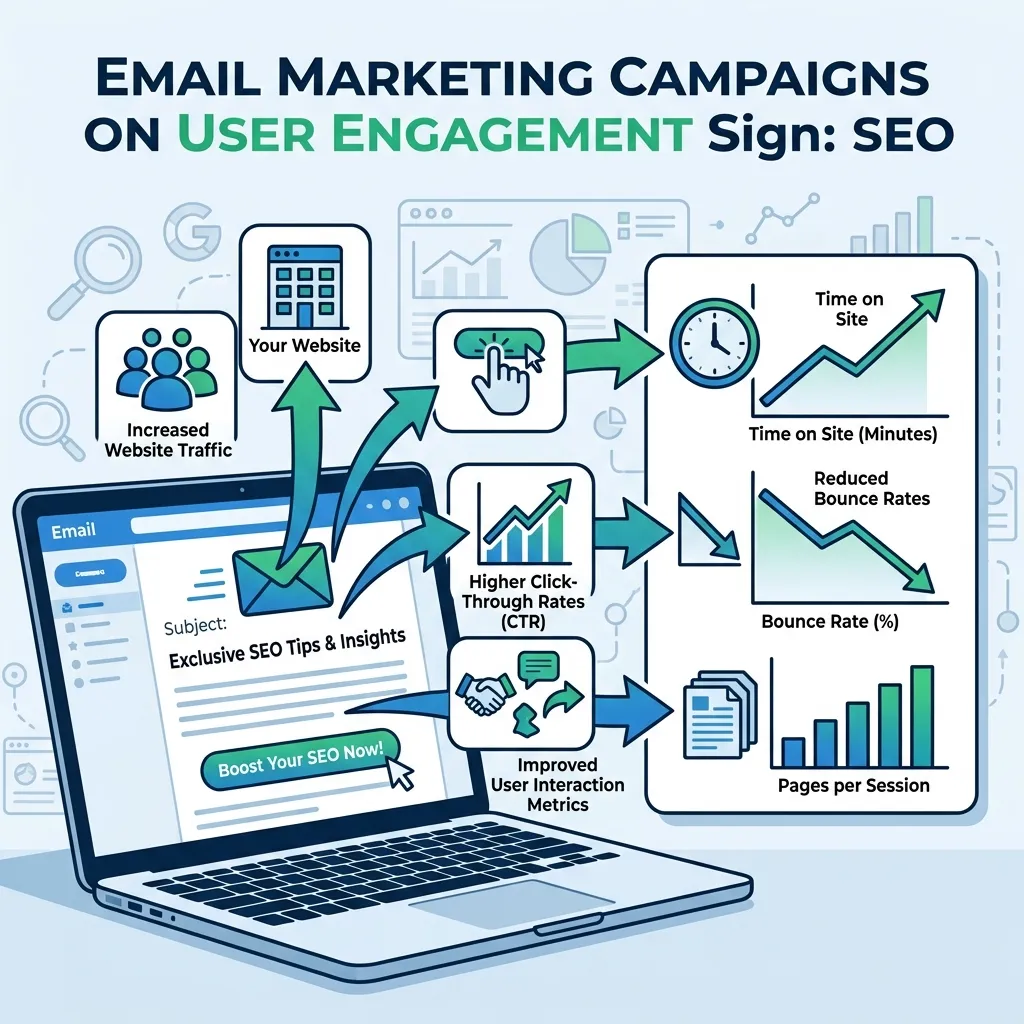
User engagement signals are the behaviors that show search engines whether people find your content useful. While Google keeps the exact recipe secret, several signals are widely understood to matter: time on page, pages per session, bounce rate, and return visits.
Email campaigns for SEO influence every one of these.
Subscribers who click through from an email arrive with intent. They already trust your brand and want what you offered, so they tend to:
- Stay longer. Engaged readers spend more time on the page, which lowers bounce rate.
- Explore more. A warmed-up visitor is more likely to click a second or third link.
- Come back. Repeat visits from loyal subscribers signal lasting value.
These behaviors strengthen email subscriber engagement and feed positive user engagement signals back to search engines. A reader who arrives, lingers, and returns tells Google your page is worth surfacing for others.
How does email marketing help you earn backlinks and shares?
Backlinks remain one of the strongest ranking factors in SEO. Email helps you earn them by getting your content in front of the people most likely to link to it.
Your subscriber list often includes bloggers, journalists, partners, and industry peers. When you email them genuinely useful content, some will reference it, quote it, or share it with their own audiences. Each of those mentions can turn into a backlink.
Social shares work the same way. Add share buttons to your emails and make it easy for readers to pass content along. While shares aren’t a direct ranking factor either, they expand reach—and wider reach increases the odds that someone with a website links to you.
The formula is straightforward: create content worth sharing, then put it directly in front of an audience primed to share it.
What does a strong SEO email marketing strategy look like?
A good SEO email marketing strategy connects your email program to your content and search goals. It’s less about sending more emails and more about sending the right ones to the right people.
Here are the building blocks.
Build a quality subscriber list
Focus on people who genuinely want your content. A smaller, engaged list beats a large, indifferent one every time. Use lead magnets, gated guides, and clear signup forms to attract subscribers who match your audience.
Align email content with your SEO content
Promote the same pillar pages, guides, and articles you want to rank. When email traffic flows to your priority pages, the engagement signals land exactly where they help most.
Write subject lines that earn the open
The click can’t happen without the open. Keep subject lines clear, specific, and benefit-driven. Curiosity works, but only when the content delivers on the promise.
Segment and personalize
Send content that fits each subscriber’s interests. Personalized, segmented campaigns consistently outperform generic blasts—and higher engagement means more meaningful traffic.
Track the right metrics
Watch click-through rates to see which content resonates, then connect those clicks to on-site behavior in your analytics. Look at how email visitors move through your site compared to other channels.
Optimize for mobile
A large share of emails are opened on phones. If your emails and landing pages aren’t mobile-friendly, you’ll lose clicks and frustrate readers before they ever reach your content.
How do you measure the SEO impact of email marketing?
You can’t improve what you don’t track. To see how email supports your SEO efforts, watch a handful of connected metrics.
- Referral traffic from email. Use your analytics to see how many sessions email drives and which pages get the most visits.
- On-site behavior of email visitors. Compare time on page, pages per session, and bounce rate for email traffic versus other sources.
- Returning visitors. Track how many subscribers come back over time—a sign of strong email subscriber engagement.
- Assisted conversions. Email often plays a supporting role in conversions that finish through search. Attribution reports help you spot this overlap.
Reviewing these numbers regularly shows you which campaigns drive the most valuable traffic, so you can do more of what works.
Putting email and SEO to work together
Email marketing and SEO aren’t competing channels—they’re partners. Email delivers the fast, reliable traffic that gives your content momentum. SEO turns that momentum into long-term visibility. Used together, they create a cycle where each channel feeds the other.
Start small. Pick your best-performing page, promote it to a segment of your list, and watch how email visitors behave once they arrive. Then build from there—refine your segments, sharpen your subject lines, and keep pointing engaged readers toward the content you most want to rank.
The brands that win at search rarely rely on one tactic. They connect the dots between owned audiences and organic discovery. Your subscriber list is one of the most underused tools for stronger rankings. Put it to work.
Frequently asked questions
Is email marketing a direct Google ranking factor?
No. Google does not use email metrics like opens, clicks, or subscriber counts in its ranking algorithm. Email helps SEO indirectly by driving traffic and improving user engagement signals such as time on page, pages per session, and return visits.
How quickly can email marketing affect my SEO?
Email drives traffic almost immediately—often within minutes of sending. The SEO benefits build more slowly. As engaged visitors generate positive signals, shares, and backlinks over weeks and months, search engines gradually reward your content with better visibility.
What’s the best type of email for driving organic traffic?
Content-focused emails work best. Newsletters, new post announcements, and roundups of evergreen guides all point subscribers to your site. The key is relevance: segment your list so each reader gets content that matches their interests, which leads to more clicks and stronger engagement.
Can email marketing help me earn backlinks?
Yes, indirectly. By sharing valuable content with subscribers who include bloggers, journalists, and industry peers, you increase the chances that someone references or links to your work. Email puts your best content in front of the people most likely to share it.
Do I need a large email list to see SEO benefits?
No. A small, engaged list often outperforms a large, disengaged one. What matters most is sending relevant content to subscribers who click through, stay on your site, and return—because those behaviors create the engagement signals that support SEO.
Does email marketing directly improve SEO rankings?
No, email marketing is not a direct ranking factor. However, it supports SEO by increasing traffic and engagement signals that influence rankings indirectly.
How does email marketing help SEO?
It helps SEO by driving visitors to your website, increasing page views, improving time on site, and encouraging shares and backlinks.
Can email traffic improve website rankings?
Yes, indirectly. Email-driven traffic can improve user engagement signals, which search engines may reward over time.
Is email marketing good for content promotion?
Yes. Email is one of the most effective ways to promote new and existing content to a targeted audience.
Does email marketing increase organic traffic?
Yes, indirectly. Email brings visitors who may later return via search or share your content, increasing organic visibility.
How does email help with backlinks?
Email puts your content in front of bloggers, journalists, and creators who may link to it if they find it valuable.
What type of emails work best for SEO?
Content-driven emails like newsletters, blog updates, and evergreen content promotions work best for SEO support.
Do engagement metrics from email affect SEO?
Not directly, but improved engagement from email traffic (like longer visits and lower bounce rates) can positively influence SEO signals.
Can small email lists still help SEO?
Yes. Even small but engaged email lists can drive high-quality traffic and improve content performance.
How should email and SEO work together?
Email should be used to promote SEO-focused content, drive traffic to key pages, and support long-term organic growth through engagement and shares.