
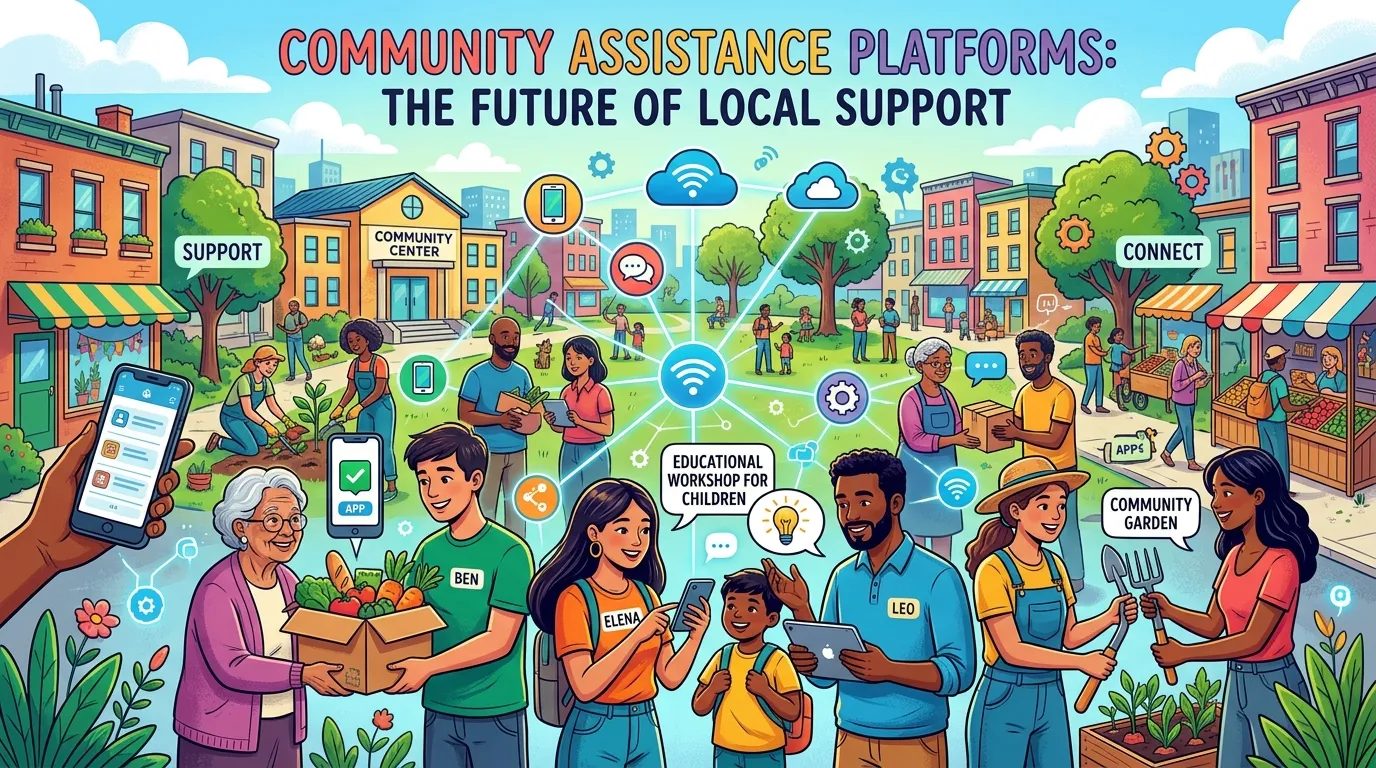
Community assistance platforms are digital tools that connect neighbors, volunteers, and nonprofits to coordinate local support, share resources, and drive social impact. These platforms streamline everything from volunteer coordination to resource distribution, making it easier for communities to help themselves—and each other.
There’s a particular kind of problem that governments and charities have struggled with for decades: the gap between people who need help and the people willing to give it. Food banks that run low while community members have surplus. Volunteers with free time and no clear direction. Elderly residents isolated just a few streets away from neighbors who’d happily check in. The resources exist. The goodwill exists. What’s often missing is the connection.
Community assistance platforms are built to close that gap. These digital tools—ranging from neighborhood assistance apps to full-scale nonprofit community support systems—give local networks the infrastructure to organize, communicate, and act. The result is a more responsive, more resilient kind of community support, one that scales with need and adapts to the people it serves.
This guide breaks down what community assistance platforms are, how they work, and what to look for when choosing one for your organization or neighborhood. Whether you’re running a nonprofit, coordinating volunteers, or building a neighborhood mutual aid network, you’ll find actionable insights here.
What Are Community Assistance Platforms?
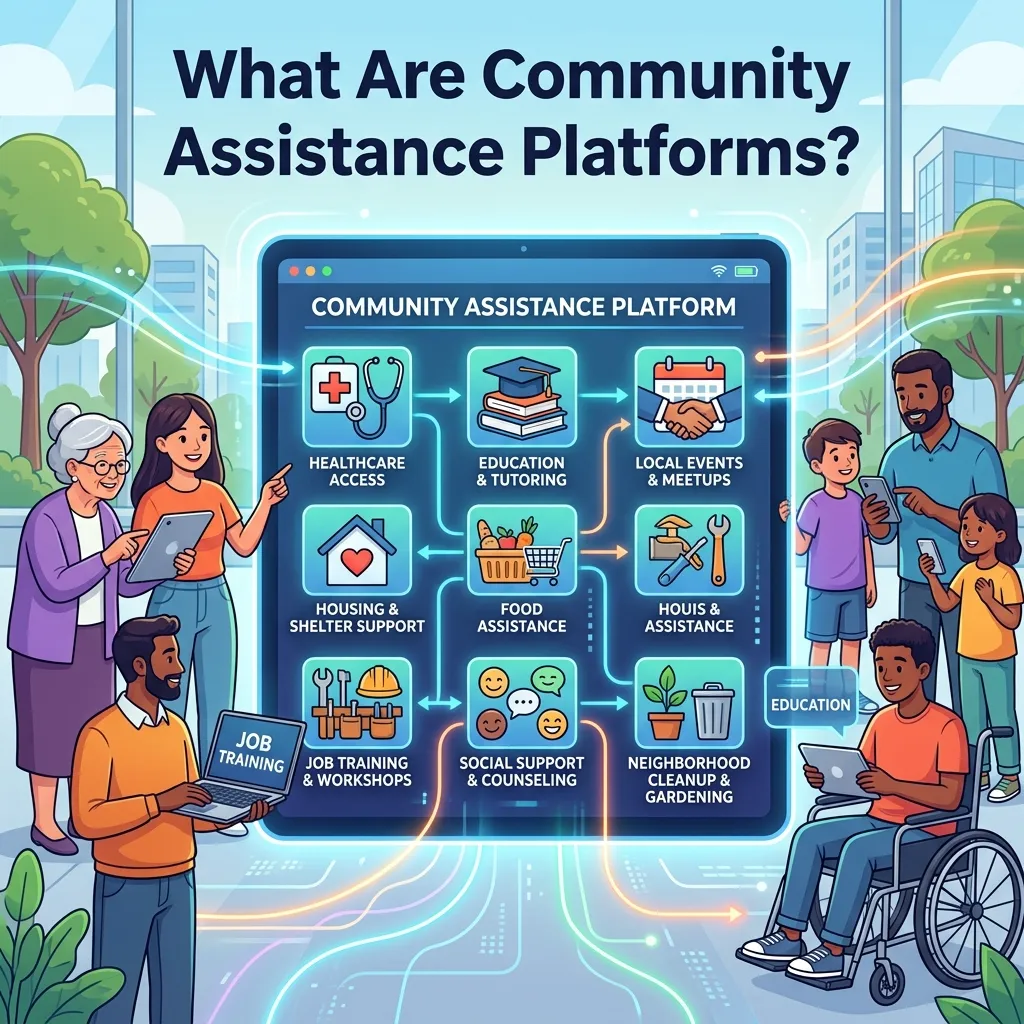
Community assistance platforms are software systems—typically web-based or mobile—designed to facilitate coordination between individuals, organizations, and volunteers at the local level. Think of them as digital infrastructure for community care.
At their core, these platforms typically offer:
- Resource matching: Connecting people who have resources with those who need them
- Volunteer coordination: Scheduling, tracking, and communicating with volunteers
- Community engagement tools: Forums, announcements, and event management
- Case or request management: Logging and tracking assistance requests over time
- Data and reporting: Measuring impact for donors, stakeholders, or grant applications
The category is broad. Some platforms serve hyperlocal neighborhood networks. Others support large nonprofits managing thousands of volunteers across multiple regions. The common thread is digital community collaboration—using technology to do more with the goodwill and resources already present in a community.
Why Are Online Community Support Platforms Growing So Quickly?
Several forces have pushed community engagement platforms to the center of the social impact conversation.
The pandemic accelerated adoption. During COVID-19, mutual aid networks sprang up overnight around the world. Many relied on makeshift solutions—spreadsheets, Facebook groups, WhatsApp threads—that quickly became unmanageable. The demand for purpose-built community resource management software grew sharply as a result.
Volunteer coordination has gotten more complex. According to the Bureau of Labor Statistics, millions of Americans volunteer each year. But coordinating them effectively—matching skills to needs, managing schedules, tracking hours—requires more than a clipboard and a phone call. Digital volunteer coordination platforms automate the administrative burden, freeing coordinators to focus on relationships and impact.
Trust in institutions is shifting. More people are turning to peer-to-peer and community-driven support systems rather than waiting for top-down solutions. Neighborhood assistance apps and local support networks online reflect a broader cultural shift toward community self-reliance.
Nonprofits need to prove impact. Funders increasingly require data. Community resource management software gives nonprofits the reporting tools to demonstrate outcomes, track service delivery, and make a compelling case for continued investment.
What Are the Key Features of Effective Community Collaboration Solutions?
Not all platforms are created equal. When evaluating community collaboration solutions, the most effective tools tend to share several characteristics.
Does the platform make it easy to connect needs with resources?
The most fundamental function of any community assistance platform is matching. A platform that makes it easy to post a need, browse available resources, and facilitate a connection—without unnecessary friction—will see far higher adoption than one that buries this functionality behind complex workflows.
Look for platforms with clear intake forms, intuitive search and filtering, and automated matching or notification systems. The faster a volunteer or donor can act on a request, the better the outcome for the person in need.
How does the platform handle volunteer coordination and scheduling?
Volunteer management is often cited as one of the biggest operational challenges for nonprofits and community organizations. Effective volunteer coordination platforms should offer:
- Shift scheduling and sign-up tools
- Automated reminders and confirmations
- Hour tracking and reporting
- Role-based access so different coordinators can manage their own teams
Platforms like Galaxy Digital, VolunteerHub, and Better Impact have built strong reputations in this space, each offering slightly different strengths depending on organization size and complexity.
Can it scale from a neighborhood network to a city-wide operation?
Some organizations start small—a mutual aid group covering a single suburb—and grow into something much larger. The best social impact technology platforms are built to scale. This means flexible user permissions, multi-location support, and pricing models that don’t punish growth.
If you anticipate scaling, prioritize platforms with strong API integrations and the ability to connect with tools you already use, such as CRM software, email marketing platforms, or payment processors.
How does it support community engagement beyond transactional support?
Resource matching and volunteer scheduling are transactional by nature. But the strongest communities are built on relationships, not just transactions. Look for platforms that offer community engagement features—forums, event management, storytelling tools, or recognition programs—that help members feel connected to something larger than a single request.
Platforms that combine functional utility with genuine community-building tend to retain users and volunteers longer, reducing the constant churn that plagues many community organizations.
What Types of Organizations Benefit Most from Community Assistance Platforms?
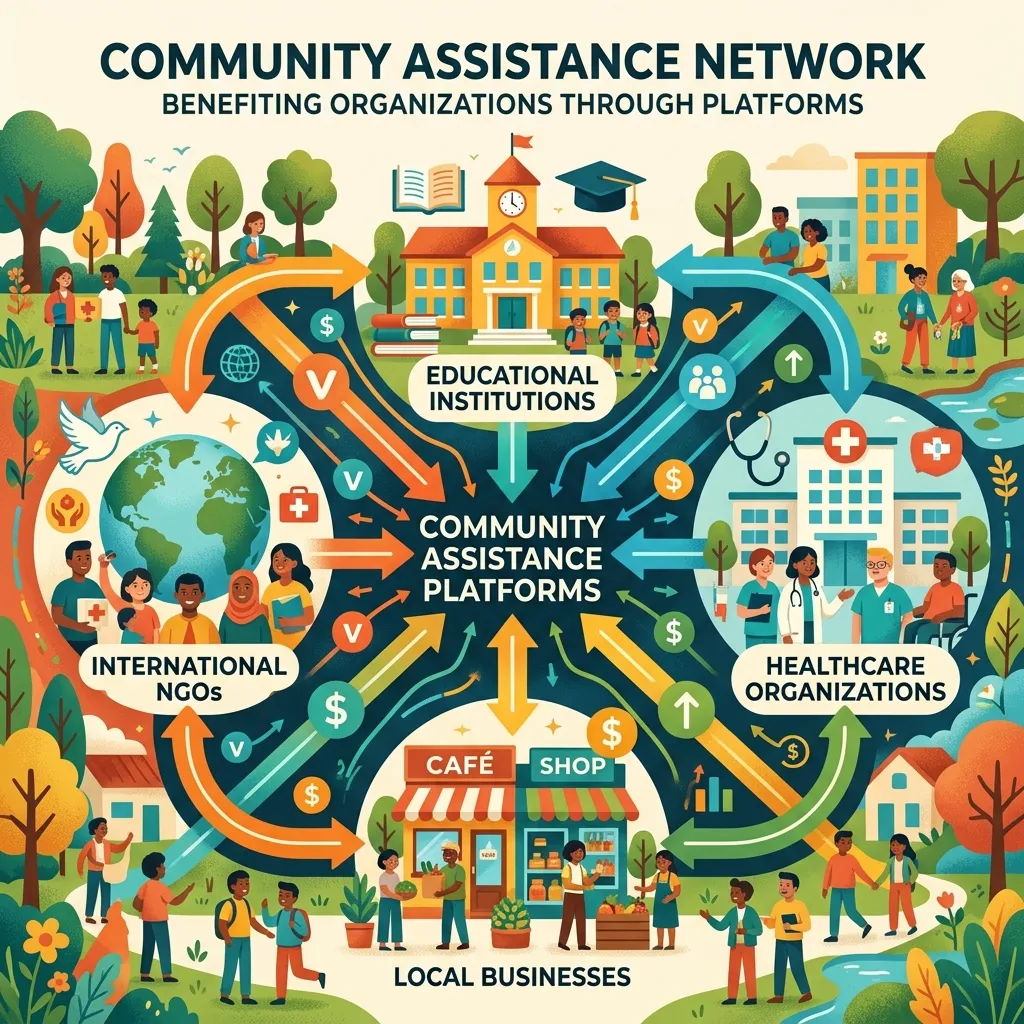
Community assistance platforms serve a wide range of users. Here’s a breakdown of who benefits most—and how.
Nonprofits and social service agencies use these platforms to manage client intake, coordinate volunteers, track service delivery, and report on impact. Nonprofit community support systems are particularly valuable for organizations managing complex caseloads or working across multiple program areas.
Local government and social services use community resource management software to connect residents with public services, reduce administrative overhead, and respond more quickly to emerging community needs.
Mutual aid networks and neighborhood groups rely on neighborhood assistance apps and local support networks online to coordinate informal, peer-to-peer help—grocery runs, childcare swaps, skill sharing, and emergency support.
Faith communities and civic organizations use community engagement platforms to organize volunteer programs, manage events, and stay connected with members between gatherings.
Emergency response organizations depend on community collaboration solutions that can scale rapidly during a crisis, managing an influx of volunteers, donations, and service requests in real time.
How to Choose the Right Community Assistance Platform for Your Needs
The right platform depends on what you’re trying to accomplish, who you’re serving, and the resources you have to manage it. Here are the most important factors to weigh.
Define your primary use case first. Are you primarily coordinating volunteers, managing resource distribution, building a neighborhood network, or all three? Different platforms are optimized for different functions. Starting with a clear primary use case will narrow the field quickly.
Consider the technical capacity of your team. Some community resource management software requires significant setup and ongoing administration. Others are designed for non-technical users and can be up and running in hours. Be honest about your team’s capacity before committing to a complex system.
Evaluate cost against impact. Many platforms offer tiered pricing or discounted rates for nonprofits. Some, like Nextdoor and Neighbors Helping Neighbors, offer free tiers for small community groups. Before comparing features, establish a realistic budget—and factor in the cost of staff time required to manage the platform.
Ask for references from similar organizations. Feature lists can be misleading. Speaking directly with organizations of similar size and scope who use the platform will give you a clearer picture of real-world performance, customer support quality, and common pain points.
Pilot before committing. Most reputable platforms offer a free trial or pilot period. Use it. Run a real project—not a demo scenario—and assess how the platform performs under actual conditions.
The Role of Data in Community Support Technology
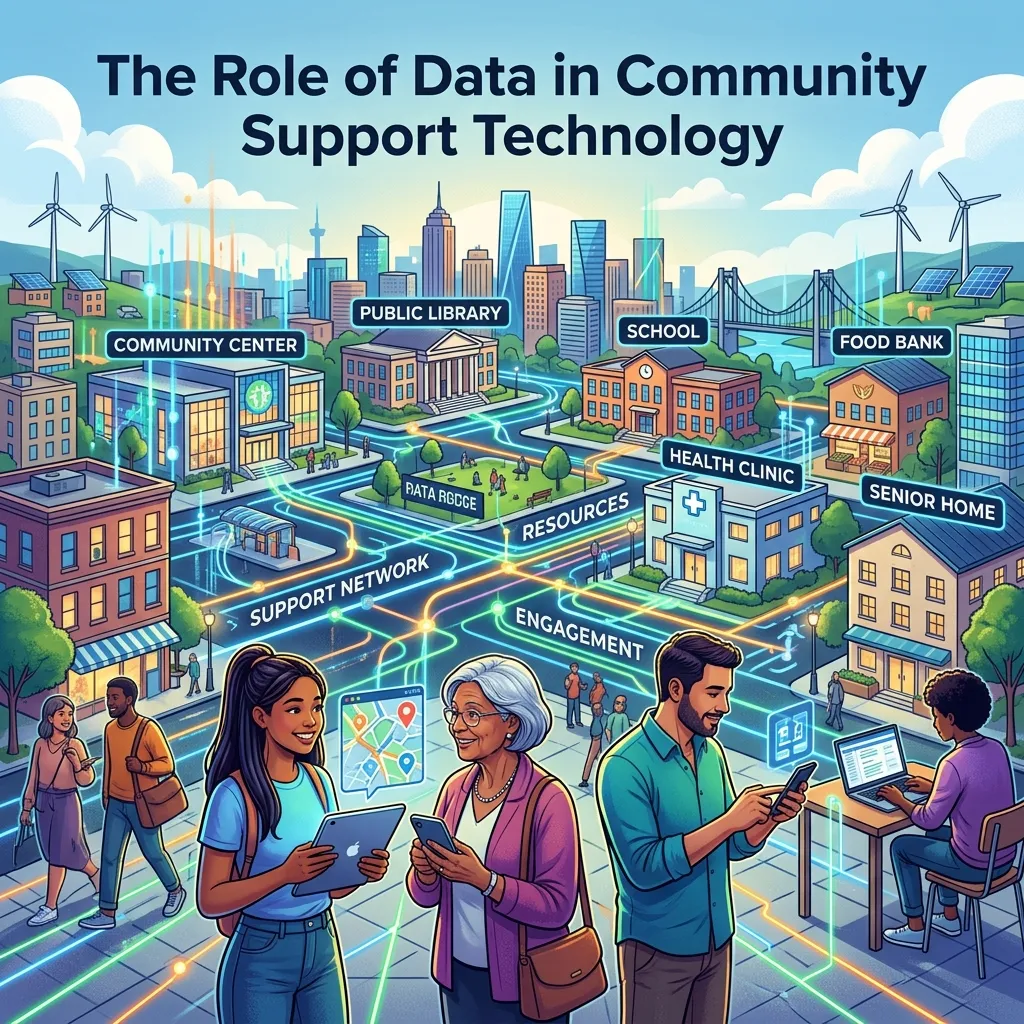
One of the most underappreciated benefits of digital community assistance tools is their ability to generate actionable data. Paper sign-in sheets and email chains leave no trail. A well-implemented community assistance platform, by contrast, captures:
- The volume and nature of requests over time
- Volunteer hours and retention rates
- Resource distribution patterns
- Geographic concentration of need
- Response times and service gaps
This data serves multiple purposes. For grant writers, it provides the evidence base that funders require. For program managers, it highlights where resources are being stretched thin. For community leaders, it tells a story—not just about what an organization does, but about the shape of need in a community.
Organizations that leverage this data proactively, rather than retrospectively, are better positioned to adapt their programs, advocate for resources, and demonstrate the kind of measurable impact that sustains long-term support.
Building More Resilient Communities Through Technology
Technology alone doesn’t build community. Relationships do. What social impact technology platforms offer is the connective tissue—the systems that make relationships possible at scale, that keep goodwill from getting lost in logistics, and that turn isolated acts of help into something more durable.
The most effective community assistance platforms don’t replace human connection. They reduce the friction that prevents it. When a single parent can post a childcare request and receive a response within the hour, or a nonprofit can deploy 200 volunteers to a disaster site with a few clicks, technology is serving its highest purpose.
The question for community organizations isn’t whether to adopt these tools—it’s which ones to prioritize, and how to implement them in a way that reflects the values of the communities they serve.
Start by identifying the biggest coordination gap in your current operation. Then look for a platform designed specifically to address it. The infrastructure for a stronger, more connected community may be closer than you think.
Frequently Asked Questions
What is a community assistance platform?
A community assistance platform is a digital tool designed to connect individuals, volunteers, and organizations within a local or regional community. These platforms typically include features for resource matching, volunteer coordination, community engagement, and impact reporting.
How are community assistance platforms different from social media?
Social media platforms are built for broad content sharing and social connection. Community assistance platforms are purpose-built for service coordination—managing requests, tracking volunteers, distributing resources, and measuring outcomes. They offer structured workflows that social media cannot replicate.
Are community assistance platforms only for nonprofits?
No. While nonprofit community support systems represent a major use case, these platforms also serve local governments, faith communities, mutual aid networks, neighborhood associations, and emergency response organizations.
How much do community assistance platforms typically cost?
Costs vary widely. Some platforms offer free tiers for small groups. Others charge monthly fees ranging from $50 to several thousand dollars depending on organization size, feature requirements, and the number of users. Many platforms offer nonprofit discounts.
What should I look for in a volunteer coordination platform?
Look for shift scheduling tools, automated reminders, hour tracking, role-based permissions, and clear reporting features. Ease of use for both administrators and volunteers is critical to adoption.
Can these platforms help with emergency or disaster response?
Yes. Many community collaboration solutions are specifically designed to scale during emergencies, managing high volumes of volunteer sign-ups, resource requests, and real-time coordination. Platforms like Team Rubicon’s GRiTS and Disaster Relief platforms are built with this use case in mind.
How do I get community members to actually use a new platform?
Adoption is one of the biggest challenges. Start with a small, engaged group of early adopters. Offer clear onboarding, demonstrate immediate value, and reduce the barrier to first use as much as possible. Peer-to-peer promotion—trusted neighbors recommending the platform to other neighbors—tends to be more effective than top-down communication.
What are community assistance platforms?
Community assistance platforms are digital tools that connect people, volunteers, and organizations to coordinate local support, share resources, and manage community services more efficiently.
How do community assistance platforms help local communities?
These platforms improve community support by matching people with available resources, organizing volunteers, managing requests, and creating better communication between residents and organizations.
Who can use community assistance platforms?
Community assistance platforms are useful for nonprofits, local governments, volunteer groups, neighborhood associations, faith organizations, and mutual aid networks.
What features should a community assistance platform include?
The best platforms include resource matching, volunteer coordination, scheduling tools, communication features, request tracking, reporting, and community engagement solutions.
Are community assistance platforms only for nonprofits?
No. While nonprofit organizations benefit greatly from these tools, community assistance platforms also support schools, local governments, emergency response teams, and neighborhood groups.
How do volunteer coordination platforms improve organization?
Volunteer coordination platforms help manage schedules, track volunteer hours, send reminders, assign tasks, and ensure the right people are connected to the right opportunities.
What is the difference between social media and community assistance platforms?
Social media focuses on general communication and content sharing, while community assistance platforms are designed specifically for organizing support, managing resources, and measuring community impact.
How much do community assistance platforms cost?
Costs vary depending on features, users, and organization size. Some platforms offer free plans for small groups, while advanced nonprofit community support systems may require paid subscriptions.
Can community assistance platforms support emergency response efforts?
Yes. Many community assistance platforms help during emergencies by coordinating volunteers, tracking resource needs, and connecting affected communities with available support.
How can organizations increase adoption of a community assistance platform?
Organizations can improve adoption by providing simple onboarding, explaining benefits clearly, training users, and encouraging community members to actively participate through the platform.