
Email Support Services help businesses manage customer inquiries through email using in-house teams, outsourced agents, or help desk systems. These services improve response times, reduce workload, and enable 24/7 customer support while keeping costs lower than building a full internal team. With the right setup, businesses can scale efficiently and deliver faster, more reliable customer experiences.
Email support services handle customer inquiries through email on behalf of your business, either with an in-house team, outsourced agents, or a help desk system. They help companies respond faster, scale support without hiring sprees, and offer round-the-clock coverage—often at a lower cost than building everything internally.
Customers expect quick, helpful answers when they reach out by email. Yet many businesses struggle to keep up. Inboxes overflow, response times slip, and frustrated customers take their money elsewhere. The good news? You don’t have to manage it all alone.
This guide breaks down everything you need to know about email support services—what they are, how outsourcing works, the tools involved, and how to choose the right setup for your business. Whether you’re a small startup drowning in support tickets or an established company looking to scale, you’ll find practical insights to help you make a smart decision.
By the end, you’ll understand the difference between an in-house team and an outsourced one, how help desk systems streamline your workflow, and what to look for in a professional email support partner.
What are customer email support services?
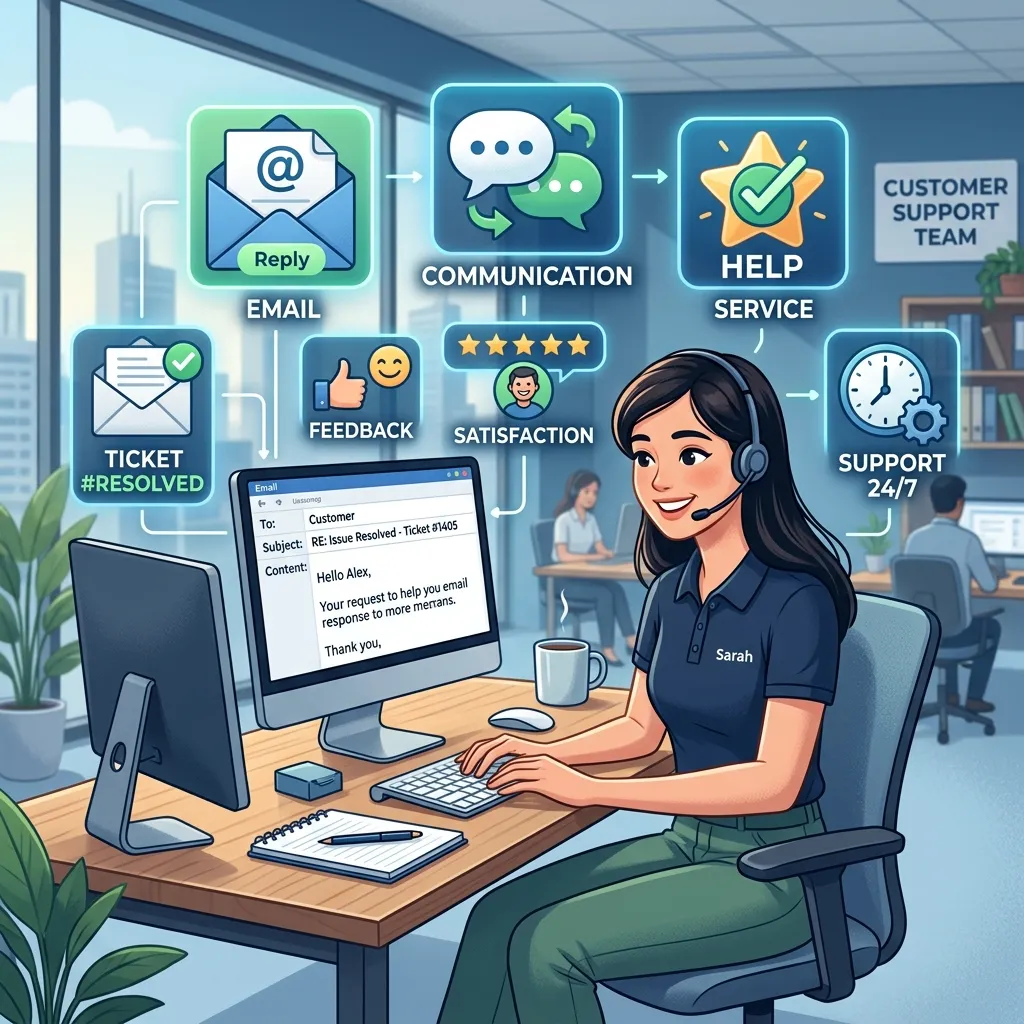
Customer email support services manage the emails your customers send when they need help. That might mean answering questions about a product, troubleshooting a problem, processing a refund, or guiding someone through setup.
These services can take several forms. Some businesses build an internal team. Others hand the work to a specialized provider. Many use a mix of both, supported by software that organizes and tracks every message.
The core goal stays the same no matter the approach: give customers accurate, timely answers that leave them satisfied. Email remains one of the most popular support channels because it creates a written record, gives agents time to craft thoughtful replies, and lets customers reach out on their own schedule.
Why email still matters as a support channel
Live chat and phone support get plenty of attention, but email holds steady as a customer favorite. It’s asynchronous, meaning customers can send a message and get on with their day. There’s no waiting on hold or rushing through a conversation.
Email also works well for complex issues. Agents can attach screenshots, link to detailed guides, and reference earlier conversations. For customers, having everything in writing makes it easy to revisit instructions later.
How does outsourced email customer support work?
Outsourced email customer support means hiring an external provider to handle your customer emails. Instead of recruiting, training, and managing your own team, you partner with a company that specializes in support.
Here’s the typical process:
- Onboarding: You share details about your products, policies, and brand voice. The provider learns how you want customers treated.
- Setup: The provider integrates with your existing tools, such as your help desk or CRM.
- Handling tickets: Trained agents respond to customer emails using your guidelines and approved templates.
- Reporting: You receive regular updates on response times, resolution rates, and customer satisfaction.
Good providers act as a seamless extension of your brand. Customers often can’t tell whether they’re talking to an in-house employee or an outsourced agent—and that’s exactly the point.
When does business email support outsourcing make sense?
Outsourcing isn’t right for every company, but it solves real problems for many. Consider it if:
- Your support volume swings up and down with seasons or product launches.
- You’re spending too much time on support and not enough on growth.
- You need coverage outside normal business hours but can’t justify full-time night staff.
- Hiring and training costs are eating into your margins.
Choose in-house support instead if your product is highly technical, requires deep institutional knowledge, or if customer relationships are central to your competitive edge. Many businesses land somewhere in the middle—keeping complex cases internal while outsourcing routine inquiries.
What do professional email support solutions include?

Professional email support solutions go beyond simply replying to messages. The best providers bring structure, technology, and expertise that most small teams can’t match on their own.
A complete solution usually includes:
- Trained agents who understand customer service best practices.
- Help desk software to organize, route, and track tickets.
- Quality monitoring to ensure replies stay accurate and on-brand.
- Performance analytics that highlight trends and bottlenecks.
- Scalable staffing that grows or shrinks with your needs.
The right combination depends on your goals. A company focused on customer retention might prioritize quality monitoring and personalized responses. A high-volume retailer might value speed and automation more.
Why choose 24/7 email support services?
Customers don’t only need help during business hours. Someone might hit a snag at midnight, on a weekend, or during a holiday. With 24/7 email support services, every message gets a response no matter when it arrives.
Round-the-clock coverage offers clear benefits:
- Faster response times keep customers happy and reduce frustration.
- Global reach lets you serve customers across time zones without gaps.
- Higher conversion rates, since prompt answers can turn a hesitant shopper into a buyer.
Building 24/7 coverage in-house is expensive. You’d need multiple shifts, backup staff, and management around the clock. Outsourcing to a provider with global teams often delivers the same coverage at a fraction of the cost.
How do email help desk support services improve efficiency?
Email help desk support services use specialized software to manage customer inquiries. Rather than juggling messages in a shared inbox, agents work within a system designed for support.
A help desk brings order to chaos. Every email becomes a trackable ticket. Agents can assign tickets, set priorities, and collaborate without stepping on each other’s toes. Nothing slips through the cracks.
Key features of an email ticket support system
An email ticket support system turns scattered emails into an organized workflow. Common features include:
- Automatic ticket creation from incoming emails.
- Smart routing that sends tickets to the right agent or team.
- Canned responses for frequently asked questions.
- Tags and categories to organize and analyze issues.
- SLA tracking to ensure tickets get resolved on time.
- Reporting dashboards that reveal performance trends.
These tools cut response times and reduce errors. They also give managers visibility into how the team performs, making it easier to spot problems and improve over time.
What is managed email customer service?
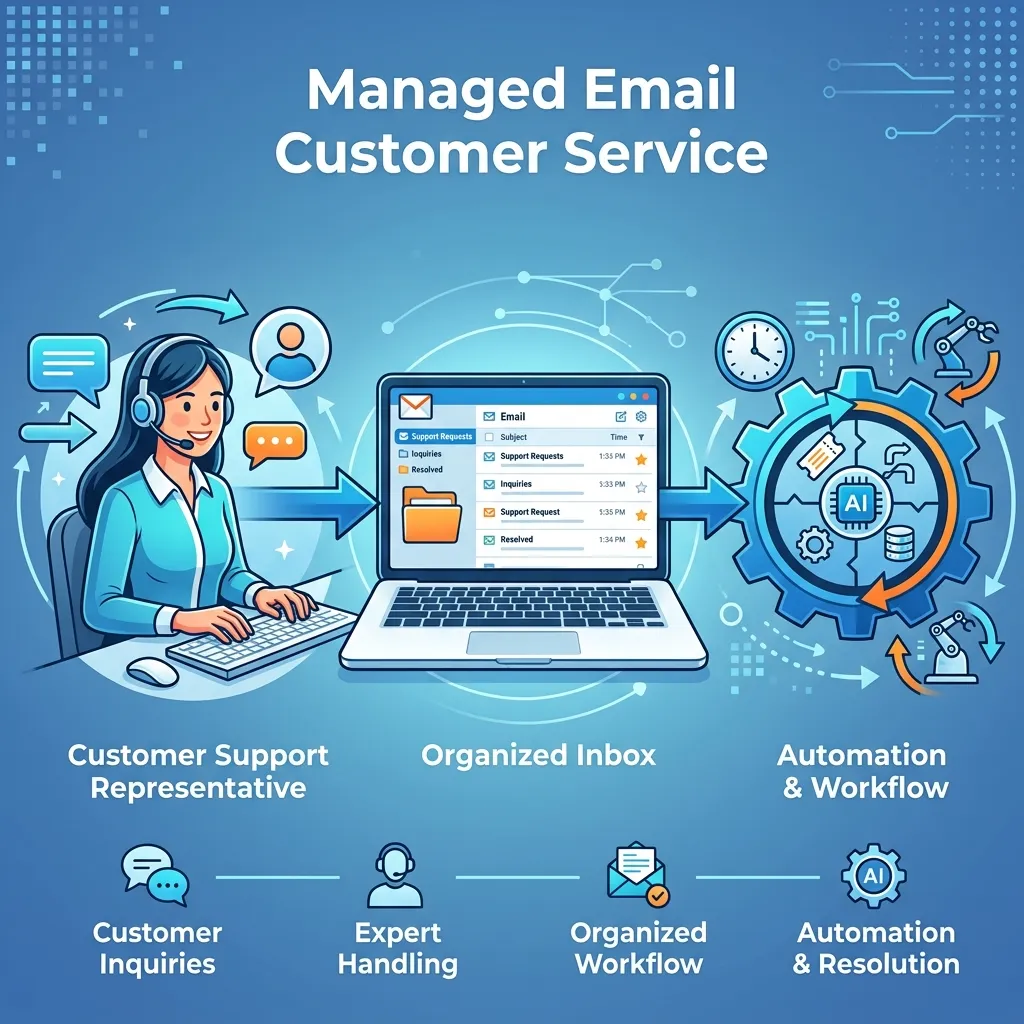
Managed email customer service means a provider takes full responsibility for your email support operation. They handle staffing, training, technology, and quality—you simply set the goals and review the results.
This hands-off model appeals to businesses that want results without the day-to-day hassle. Instead of micromanaging agents or troubleshooting software, you focus on your core business while experts run support behind the scenes.
Managed services work especially well for companies that lack the time or expertise to build support internally. The provider brings proven processes and a ready-made team, so you skip the steep learning curve.
How do remote email support team services work?
Remote email support team services give you a dedicated team that works from anywhere. Thanks to cloud-based tools, agents can handle tickets, collaborate, and meet performance targets without sitting in your office.
Remote teams offer flexibility and reach. Providers can hire skilled agents from a global talent pool, which often means better coverage and competitive pricing. For customers, the location of the agent doesn’t matter—what matters is a fast, helpful reply.
A well-run remote team relies on clear communication, solid documentation, and the right software. The best providers invest in all three, so quality stays consistent regardless of where agents are based.
Choosing the right email-based customer service solution
With so many options, picking the right email-based customer service solution can feel overwhelming. Focus on a few key factors to narrow your choices.
- Response and resolution times: Ask providers about their average speeds and how they measure success.
- Scalability: Make sure the solution can grow with your business.
- Integration: Check that the provider works with your existing tools.
- Quality control: Look for monitoring, feedback loops, and regular reporting.
- Pricing model: Understand whether you pay per ticket, per agent, or a flat monthly rate.
Choose a per-ticket model if your volume is unpredictable and you want costs tied to usage. Choose a dedicated-team model if you need consistent coverage and deeper product knowledge. The right fit depends on your volume, budget, and how central support is to your customer experience.
Frequently asked questions
How much do email support services cost?
Pricing varies widely based on volume, complexity, and service level. Some providers charge per ticket, often ranging from a few dollars to over ten dollars per resolved email. Others charge per agent or offer flat monthly plans. Outsourcing typically costs less than building an in-house team once you factor in salaries, software, and training.
How long does it take to set up outsourced email support?
Setup usually takes a few days to a few weeks. Simple operations with clear documentation can launch quickly, while complex products with detailed workflows take longer. The biggest factor is how prepared you are with guidelines, templates, and product information.
Can outsourced agents match the quality of an in-house team?
Yes, when you choose a reputable provider. Quality depends on thorough onboarding, clear guidelines, and ongoing monitoring. Good providers train agents on your brand voice and policies so customers receive consistent, accurate replies. Poor results usually stem from weak onboarding or lack of oversight, not outsourcing itself.
What’s the difference between a help desk and email support services?
A help desk is the software that organizes and tracks customer emails as tickets. Email support services refer to the people and processes that actually answer those emails. Many businesses use both together—a help desk system staffed by a trained support team.
Is email support still relevant compared to live chat?
Yes. Email remains a top channel because it’s asynchronous, creates a written record, and suits complex issues. Many customers prefer email for non-urgent questions since they can send a message and continue with their day rather than waiting in a chat queue.
What are Email Support Services?
Email Support Services handle customer queries, complaints, and requests through email using trained agents or support systems.
Why are Email Support Services important for businesses?
They improve customer satisfaction by providing fast, organized, and reliable responses to customer inquiries.
How do Email Support Services work?
Customer emails are turned into tickets, assigned to agents, and resolved using help desk tools or support teams.
What is the difference between in-house and outsourced Email Support Services?
In-house teams are managed internally, while outsourced services are handled by external providers specializing in customer support.
Are Email Support Services cost-effective?
Yes, they often cost less than hiring and training a full internal support team, especially for growing businesses.
Can Email Support Services run 24/7?
Yes, many providers offer 24/7 coverage to handle customer inquiries across different time zones.
What tools are used in Email Support Services?
Help desk software, ticketing systems, CRM tools, and automation platforms are commonly used.
How fast should Email Support Services respond?
Response times vary, but many businesses aim to reply within a few hours to maintain good customer satisfaction.
When should a business outsource Email Support Services?
Outsourcing is ideal when support volume grows, response times slow down, or 24/7 coverage becomes necessary.
Taking the next step with email support
Strong email support keeps customers happy, loyal, and likely to return. The right approach—whether in-house, outsourced, or managed—depends on your volume, budget, and goals.
Start by reviewing your current support performance. How fast do you respond? How many tickets pile up? Where do customers get frustrated? Those answers will point you toward the solution that fits best.
If your team is stretched thin or you need round-the-clock coverage, exploring outsourced or managed email support is a smart move. With the right partner and tools, you can deliver fast, professional service that turns one-time buyers into lifelong customers.