
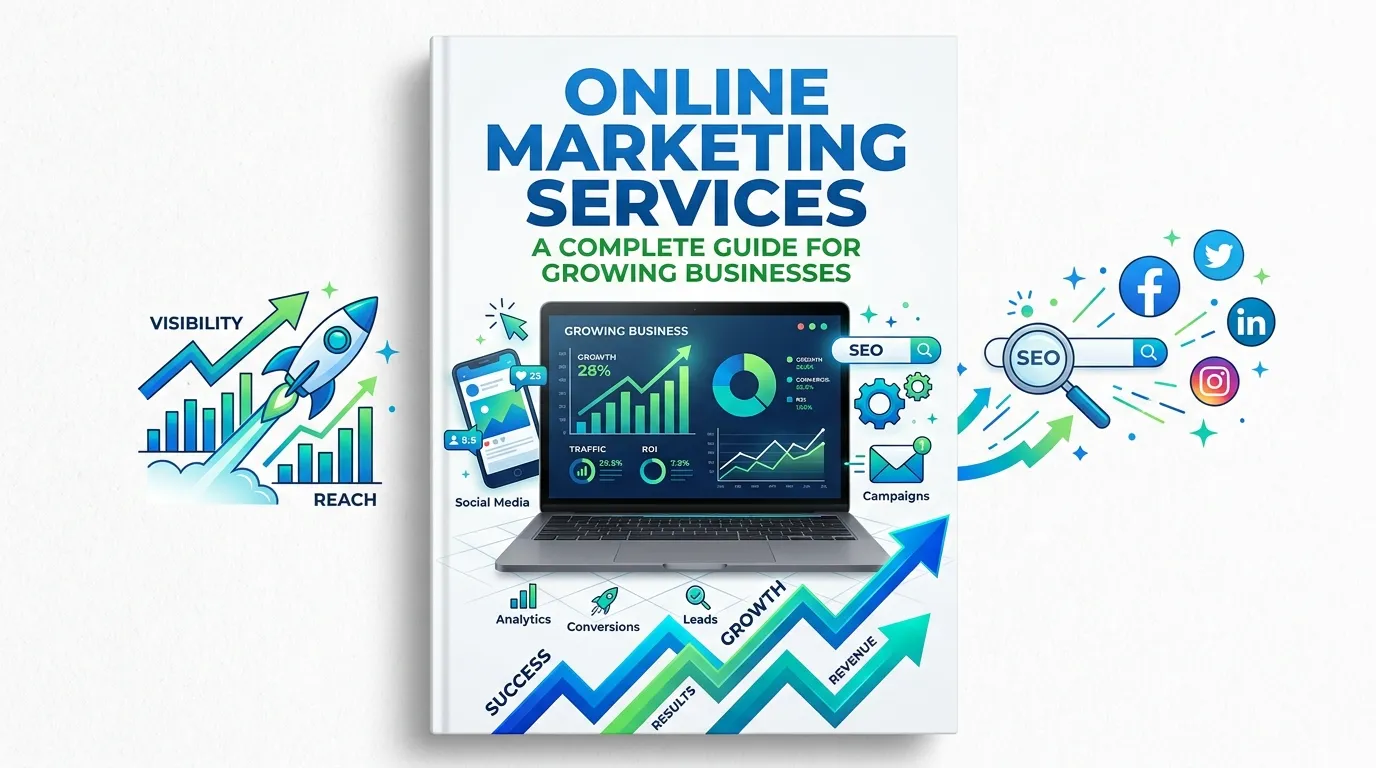
Online marketing services include SEO, PPC, content, email, and social media strategies that help businesses attract customers and increase sales. These services are managed by agencies or experts who plan and optimize campaigns across multiple channels. With the right provider, businesses can improve visibility, generate leads, and achieve long-term growth.
Online marketing services are professional offerings—like SEO, paid ads, content, email, and social media—that help businesses attract customers and grow revenue. The best providers combine strategy, execution, and measurement to deliver results. Small businesses often benefit most from affordable, full-service agencies that bundle these channels into one coordinated plan.
Choosing the right marketing partner can feel overwhelming. There are thousands of agencies, freelancers, and platforms all promising more traffic, more leads, and more sales. Some deliver. Many don’t.
This guide breaks down what online marketing services actually include, how to spot a quality provider, and which solutions fit different business goals. Whether you run a local shop, an ecommerce store, or a growing B2B company, you’ll learn how to match services to your budget and objectives—and how to tell genuine results from empty promises.
By the end, you’ll have a practical framework for evaluating providers, understanding common packages, and investing your marketing dollars wisely.
What does a digital online marketing services agency actually do?
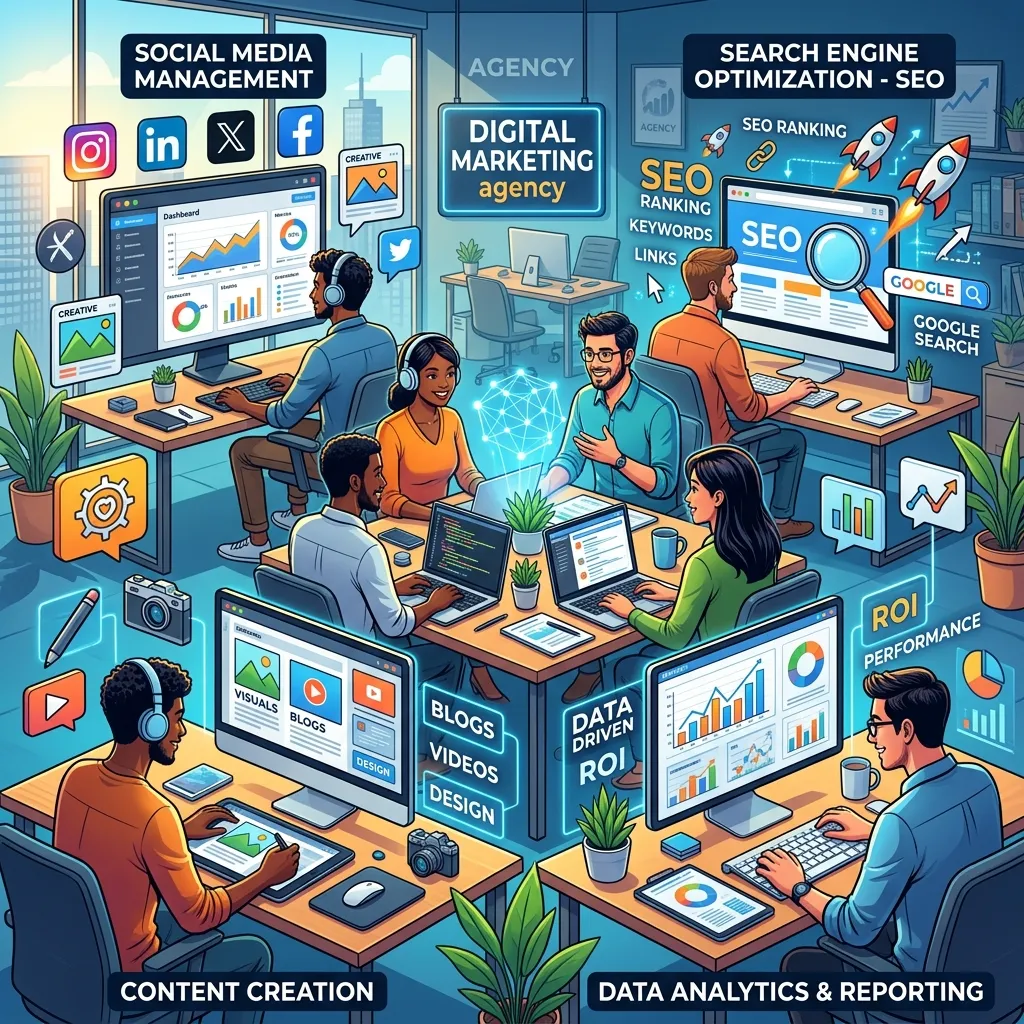
A digital marketing agency manages the online channels that bring customers to your business. Instead of hiring separate specialists for every task, you work with one team that plans, executes, and reports on your campaigns.
Most agencies cover a core set of services:
- Search engine optimization (SEO): Improving your website so it ranks higher in Google and other search engines.
- Pay-per-click advertising (PPC): Running paid ads on platforms like Google Ads and Meta.
- Content marketing: Creating blogs, guides, videos, and other assets that attract and educate your audience.
- Social media marketing: Building your presence and engagement across platforms like Instagram, LinkedIn, and TikTok.
- Email marketing: Nurturing leads and customers through targeted email campaigns.
- Analytics and reporting: Tracking performance and adjusting strategy based on real data.
A good agency doesn’t treat these as separate silos. It coordinates them into one strategy, so your SEO supports your content, your content feeds your social channels, and your ads amplify what’s already working.
How do you find affordable online marketing services for businesses?
Affordable doesn’t have to mean cheap. The goal is value—services that generate more revenue than they cost.
Here’s how to find marketing that fits a tighter budget:
- Start with one or two channels. Rather than paying for everything at once, focus on the channels most likely to reach your customers. A local restaurant might prioritize local SEO and social media, while a B2B software company might focus on content and LinkedIn ads.
- Look for transparent pricing. Reputable providers explain what’s included and what isn’t. Avoid vague quotes that hide setup fees or long lock-in contracts.
- Ask about scalable packages. Many agencies offer tiered plans, so you can start small and expand as results come in.
- Consider performance-based options. Some providers tie part of their fee to outcomes, such as leads generated or sales closed.
A monthly retainer for a small business might range from a few hundred to a few thousand dollars, depending on scope. The key question isn’t “What’s the cheapest?” but “What delivers the best return for my budget?”
What makes a professional online marketing services company stand out?
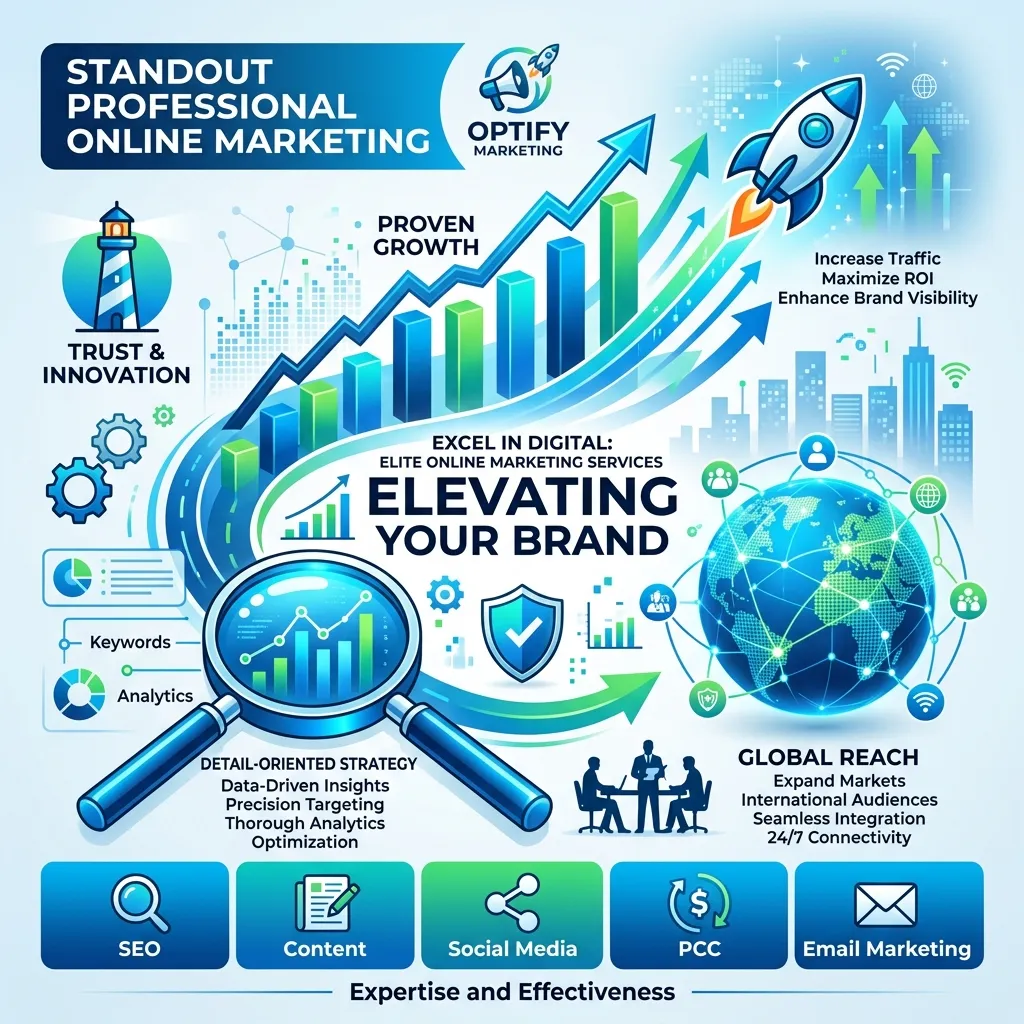
Not all providers are created equal. A professional company brings structure, accountability, and proven processes to your marketing.
Look for these signs of quality:
- Clear strategy first: Professionals start by understanding your goals, audience, and competitors before recommending tactics.
- Documented processes: They have repeatable systems for campaign setup, optimization, and reporting.
- Transparent reporting: You should receive regular updates that connect activity to results, not just vanity metrics like impressions.
- Relevant case studies: Real examples of past work in your industry signal experience and reliability.
- Honest communication: Strong agencies tell you what’s realistic—and warn you away from tactics that could harm your brand.
A red flag? Any company that guarantees the #1 spot on Google overnight. Search rankings depend on many factors, and no legitimate provider controls them completely.
Why choose full-service online digital marketing solutions?
Full-service solutions combine every major channel under one roof. Instead of juggling multiple vendors, you get a single team managing your entire online presence.
This approach offers three clear advantages:
Consistency. Your brand voice, messaging, and design stay aligned across every channel. A fragmented approach—one freelancer for ads, another for social, a third for SEO—often leads to mixed signals.
Efficiency. One team can move faster because everyone shares the same data and goals. There’s less back-and-forth and fewer gaps where tasks fall through the cracks.
Better insights. When the same provider sees your whole funnel, they spot patterns a single-channel specialist would miss. For example, they might notice that your best leads come from organic search, then shift budget accordingly.
Full-service solutions work best for businesses ready to invest in coordinated growth rather than one-off projects.
How do online marketing services support small business growth?
Small businesses face a unique challenge: limited time, budget, and staff. Online marketing levels the playing field by helping you compete with larger rivals without a massive ad budget.
Here’s how the right services drive small business growth:
- Local visibility: Optimized Google Business Profiles and local SEO help nearby customers find you first.
- Targeted reach: Paid ads let you show up in front of exactly the people most likely to buy, even on a modest budget.
- Repeat business: Email and social media keep you top of mind, turning one-time buyers into loyal customers.
- Measurable progress: Unlike a billboard, online marketing shows you exactly what’s working, so you can double down on winners.
The compounding effect matters most. A single blog post might bring visitors for years. A well-tuned email list becomes a reliable sales channel you own outright. Small, consistent efforts add up to meaningful growth over time.
How do you choose the best online marketing services provider?
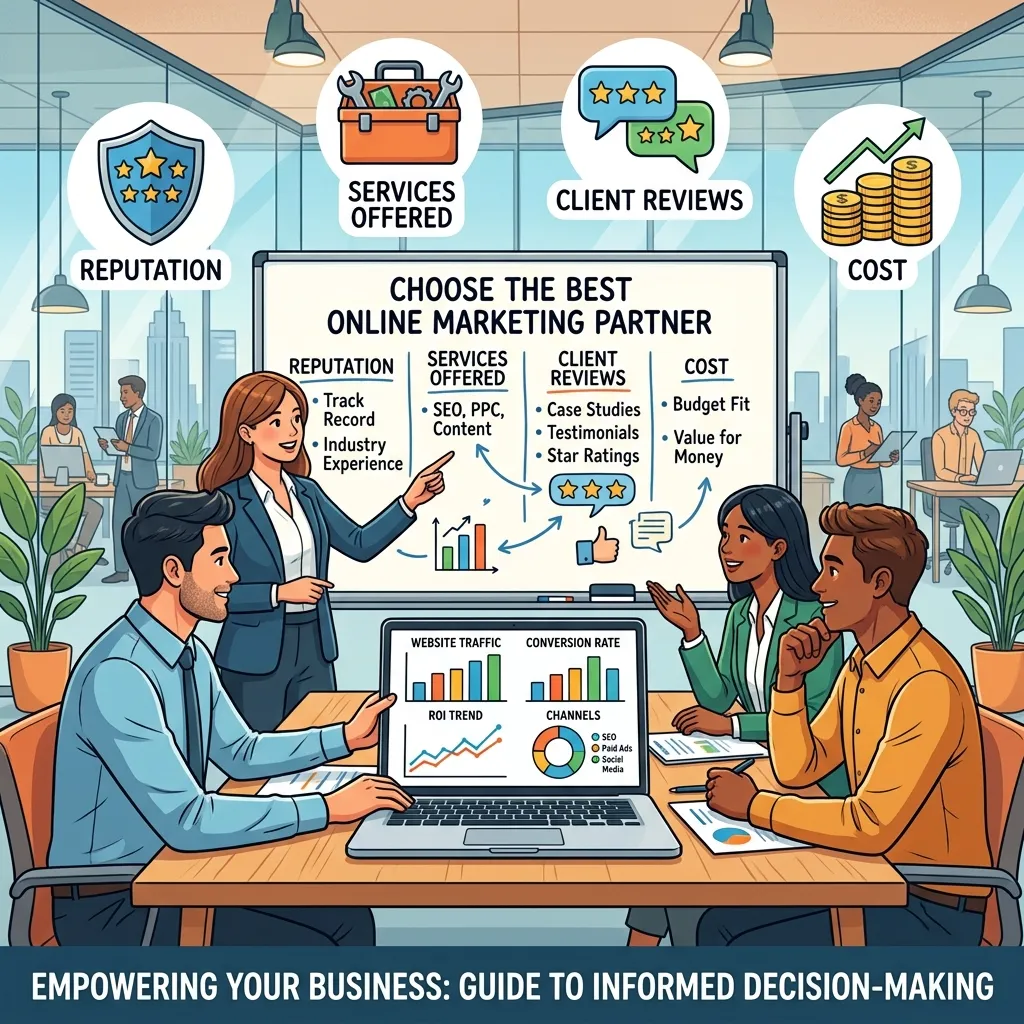
The “best” provider depends on your specific needs, but a few criteria apply universally. Use this checklist when comparing options:
- Industry experience: Have they worked with businesses like yours?
- Service fit: Do they offer the channels you actually need?
- Communication style: Will you have a dedicated contact, and how often will you hear from them?
- Reporting clarity: Can they show you exactly how they measure success?
- References and reviews: What do current and past clients say?
Choose a specialist agency if you need deep expertise in one channel—say, advanced ecommerce SEO. Choose a full-service provider if you want coordinated growth across many channels with less management on your end.
What does a results-driven online marketing services strategy look like?
A results-driven strategy starts with outcomes, not activities. Instead of “post three times a week,” it asks “How do we generate 50 qualified leads this quarter?”
Strong strategies share a common structure:
- Define clear goals. Tie every effort to a measurable objective—revenue, leads, sign-ups, or retention.
- Know your audience. Build campaigns around real customer needs, pain points, and buying behavior.
- Prioritize high-impact channels. Focus budget where it earns the most return, then expand.
- Test and optimize. Run experiments, measure results, and refine continuously.
- Report against goals. Track progress toward the outcomes that matter, not just surface metrics.
The difference between busy work and results comes down to measurement. If a provider can’t connect their activity to your bottom line, the strategy isn’t truly results-driven.
How do online marketing services generate leads?
Lead generation turns strangers into prospects who share their contact details and interest. Online marketing offers several reliable ways to fill your pipeline.
- Search ads capture people actively looking for your product or service.
- Lead magnets—like free guides, templates, or webinars—exchange valuable content for an email address.
- Landing pages with clear offers and forms convert visitors into leads.
- Retargeting brings back visitors who left without converting.
- SEO content attracts steady, qualified traffic over time.
The most effective lead generation combines several of these. For example, an SEO blog post attracts a visitor, a lead magnet captures their email, and an email sequence nurtures them toward a sale. Each piece reinforces the others.
What ecommerce online marketing services solutions work best?
Ecommerce businesses have specific needs: product visibility, smooth shopping experiences, and repeat purchases. The right solutions address each.
- Product-focused SEO: Optimizing product pages and category pages to rank for shopping searches.
- Shopping ads: Running Google Shopping and Meta product ads that display your items directly to buyers.
- Email automation: Sending abandoned-cart reminders, post-purchase follow-ups, and personalized recommendations.
- Conversion rate optimization (CRO): Improving your site’s design and checkout flow to turn more visitors into customers.
- Social commerce: Selling directly through Instagram, TikTok, and other platforms where your audience already spends time.
For ecommerce, the path to revenue is shorter and more measurable than in many industries. That makes it easier to test, learn, and scale what works.
What’s included in online marketing services and SEO packages?
SEO packages bundle the tasks needed to improve your search visibility into a single, ongoing service. While details vary by provider, most packages include several core components.
- Technical SEO: Fixing site speed, mobile usability, and crawl issues that block rankings.
- Keyword research: Identifying the terms your customers actually search for.
- On-page optimization: Improving titles, headings, content, and internal links.
- Content creation: Producing blogs and pages that target valuable keywords.
- Link building: Earning quality backlinks that boost your site’s authority.
- Monthly reporting: Tracking rankings, traffic, and conversions over time.
Entry-level packages may focus on local SEO and basic optimization. Comprehensive packages add content production, link building, and competitive analysis. Match the package to your goals—a local service business needs different SEO than a national ecommerce brand.
Putting your online marketing plan into action
Online marketing services aren’t a single product—they’re a toolkit. The right combination depends on your industry, budget, and goals. A local business might thrive on local SEO and social media, while an ecommerce brand needs shopping ads and conversion optimization.
Start by defining what success looks like for your business. Then choose a provider whose services, experience, and reporting match those goals. Begin with one or two high-impact channels, measure your results, and expand as the returns prove themselves.
The businesses that win online aren’t always the ones with the biggest budgets. They’re the ones that invest consistently, measure honestly, and adjust based on real data. With the right partner and a clear strategy, your business can do the same.
Frequently asked questions
How much do online marketing services cost?
Costs vary widely based on scope and provider. Small businesses might spend a few hundred dollars a month for a single channel, while comprehensive full-service plans can run several thousand dollars monthly. Focus on return on investment rather than the lowest price.
How long before online marketing delivers results?
It depends on the channel. Paid ads can drive traffic and leads almost immediately, while SEO and content marketing typically take three to six months to show meaningful results. The trade-off is that organic channels deliver lasting value, while ads stop working when you stop paying.
Should a small business hire an agency or do marketing in-house?
Hire an agency if you lack the time or expertise to manage campaigns well, and want faster results. Keep it in-house if you have the skills and prefer full control. Many small businesses start with an agency, then build internal capabilities over time.
What’s the difference between SEO and PPC?
SEO improves your organic (unpaid) search rankings over time, while PPC (pay-per-click) places paid ads that appear instantly. SEO offers lasting value at a lower long-term cost, while PPC delivers faster but stops the moment you pause spending. Many businesses use both together.
Which online marketing service is best for lead generation?
For immediate leads, search ads and well-designed landing pages work fastest. For sustainable, lower-cost leads over time, SEO content paired with lead magnets and email nurturing tends to deliver the best long-term return.